The Winnipeg drummer and composer approaches jazz from the outside in — drawing on rock, pop, Latin music and the sounds he knew long before jazz entered the picture. The result is music built to invite listeners deeper without sacrificing complexity.
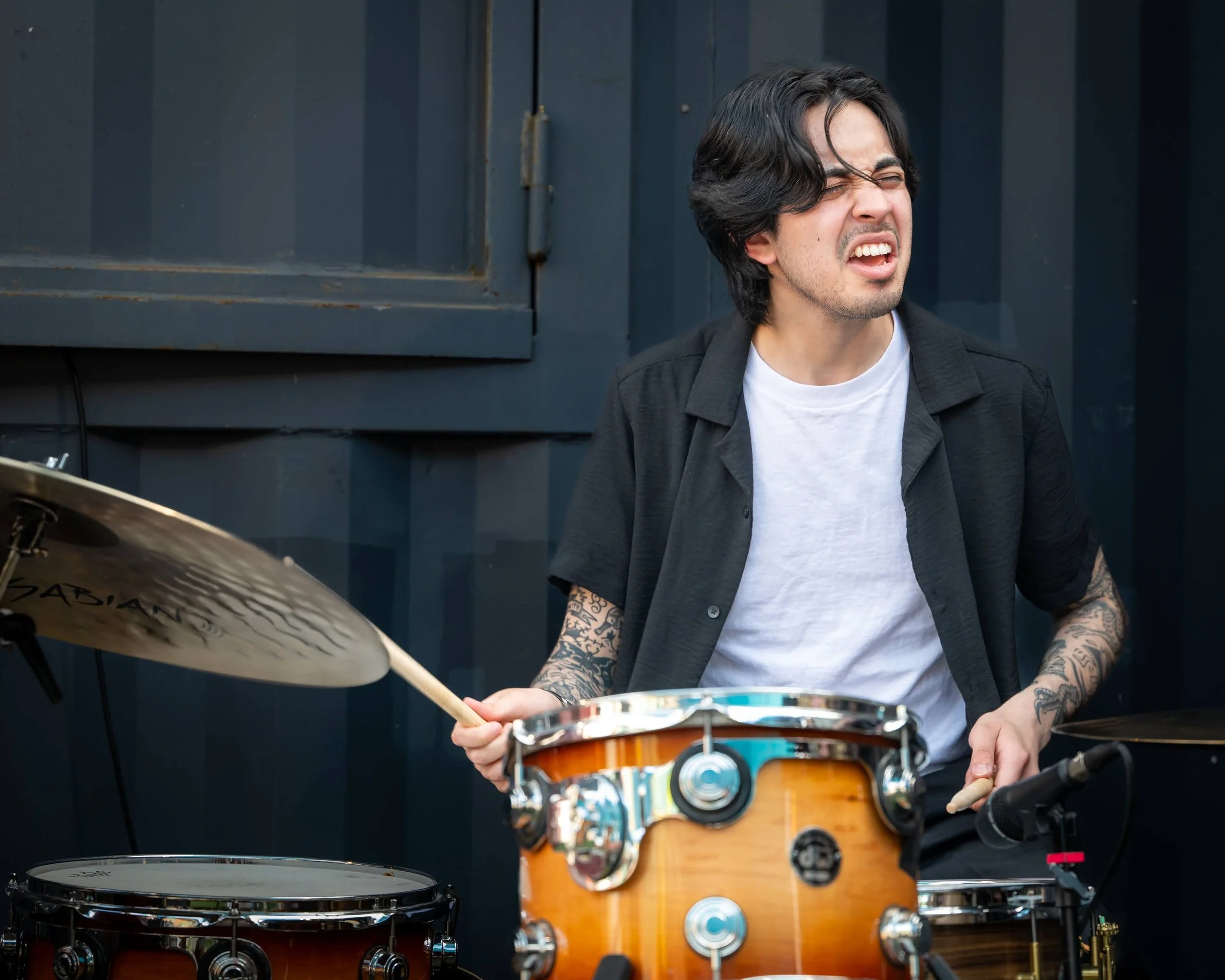
Winnipeg drummer and composer Esteban Seunarine brings jazz, rock, pop and Latin influences into a groove-centred approach shaped by both composition and improvisation.
🎧 Listen Along: From the rock and Latin music of his childhood to the jazz, fusion, hip hop and experimental sounds that later expanded his musical vocabulary, Esteban Seunarine’s influences stretch well beyond any one genre. This Esteban Selects playlist traces some of the artists, grooves and ideas behind The Expanding Whatever — and the space between structure and freedom that continues to shape his music. Listen to Esteban Seunarine Selects on Spotify»
Jazz was definitely not Esteban Seunarine’s first musical language.
His dad was a British Invasion and classic-rock fan. His mom, who is from Mexico, brought Latin American music into the house — particularly rock, pop and more traditional sounds. Jazz arrived later, when Seunarine encountered it through his high-school band program.
“I think I would be lying if I said it was my first love,” he says. “So I always sort of operate from that perspective, because it wasn’t the thing I knew first.”
That perspective sits behind one of the phrases he has used to describe his work: “making jazz for people who don’t like jazz.” The tagline originally came out of brand-development work with Misfit Music's Elise Roller, but Seunarine says it immediately resonated because it described something he was already trying to do.
“I’m just trying to do my best with bridging those two worlds.”
He still thinks about listeners like his parents when he writes — people who might not have formal jazz training, or who may hear the word jazz and assume the music isn’t meant for them.
“How do I create something and bridge those two worlds?” he asks. Jazz, to Seunarine, offers an extraordinary amount of expression, but its increasingly academic reputation can also create distance from the people who might otherwise connect with it. That’s part of what he’s trying to push against.
“I’m just trying to bring people who might not know much about the art form and then show them that there are aspects of the art form that I think they would really enjoy.”
Rock, pop and other familiar musical structures become an entry point — not a way of watering jazz down, but a pathway toward its possibilities. That idea also helps explain another phrase Seunarine uses to describe his music: where structure meets total freedom.
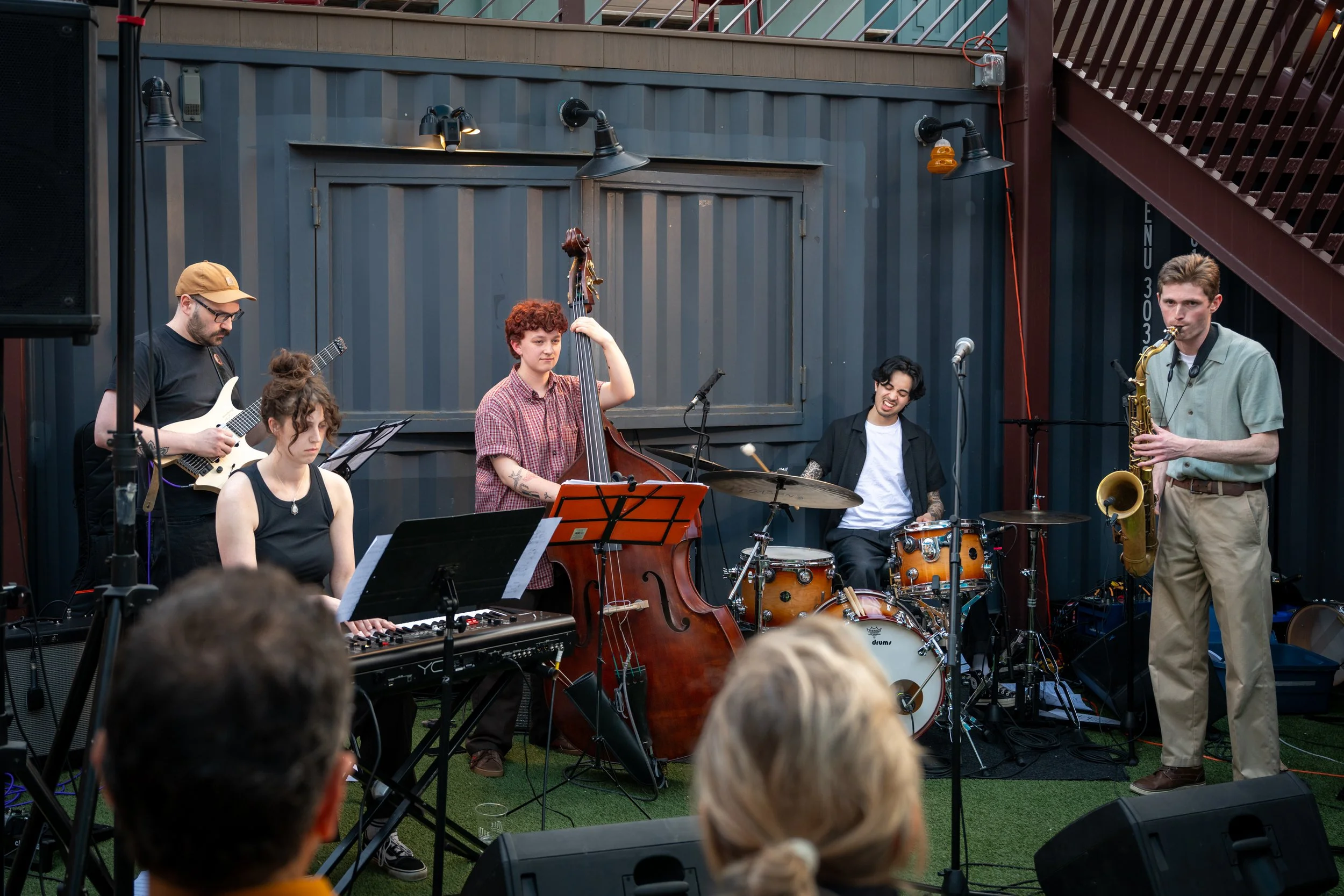
Esteban Seunarine and The Kind Ghosts perform at Little Brown Jug during the 2026 Winnipeg International Jazz Festival. Photo by John Giavedoni.
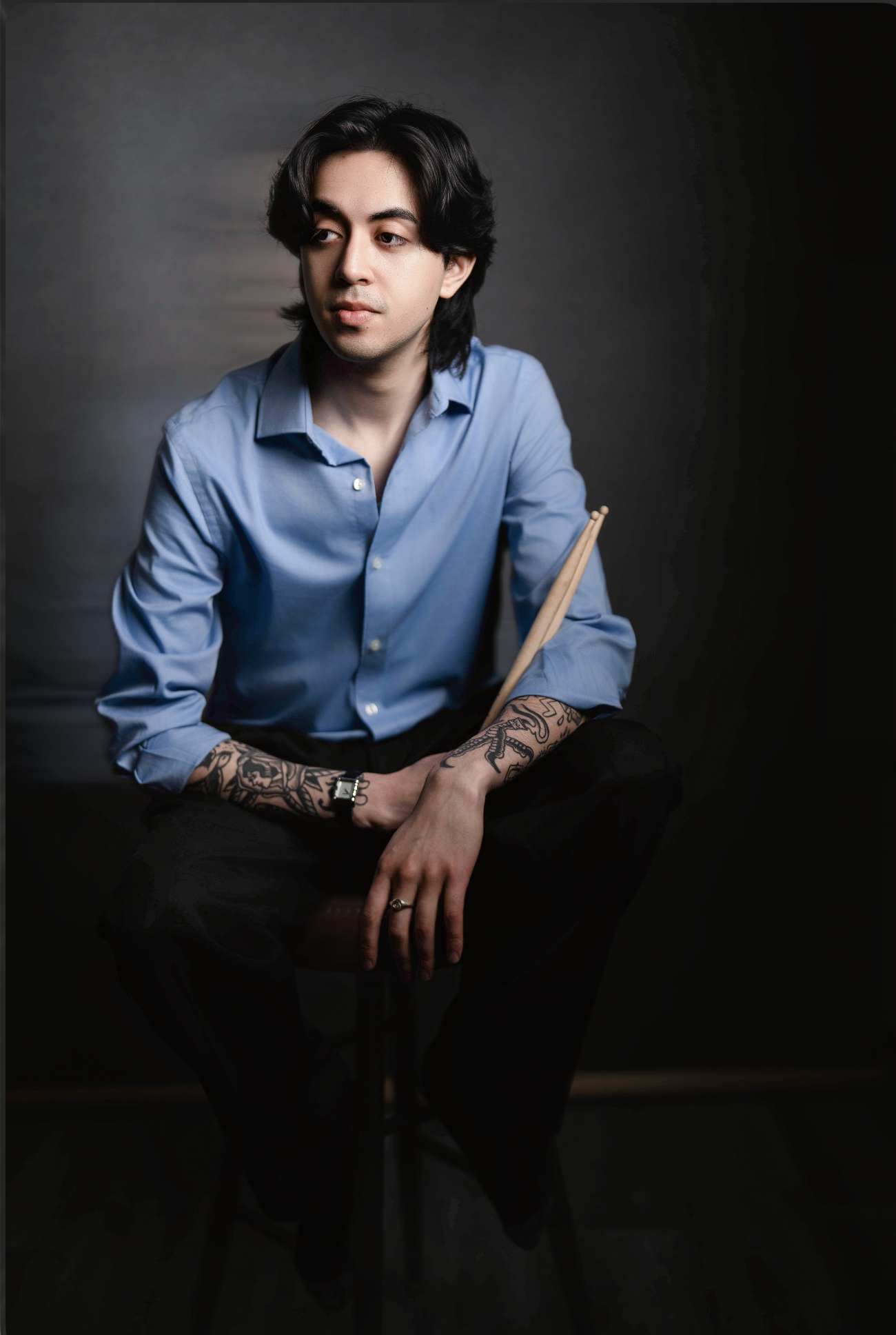
Seunarine describes his music as a meeting point between structure and freedom — compositions that leave room for the unexpected.
From behind the drum kit, the relationship can move in either direction. A rock or pop structure might become the framework for improvisation; a jazz structure might open into the textures and sounds of experimental or art rock.
“The absence of structure is also a structure in itself,” he says.
But freedom, he argues, becomes more meaningful when a listener has something to hold onto first. Rather than throwing someone immediately into the deep end, he likes the idea of gradually removing constraints as their relationship with the music grows.
“How can I get them to understand and feel about the music the way I do?” he says. “You can’t start from zero to a hundred.”
That push and pull between structure and freedom is something Seunarine works through most directly from behind the drum kit.
“First and foremost, I am a drummer,” Seunarine says. “That is my love. That is the thing I hold probably nearest and dearest to my heart.”
He is also a composer and bandleader, and increasingly sees those identities as parts of the same process. When he plays, he shifts between them almost instinctively — thinking about what the drummer needs to do, how the composition is functioning and what the larger ensemble needs.
“My writing and my composition has helped my playing,” he says. “And I think the more I improve as a player, it helps my composition.”
“I should be doing this for me, first and foremost. Not everyone else.”
That relationship became clearer while making The Expanding Whatever.
Seunarine describes himself as increasingly comfortable with his own musical instincts. At 24, approaching 25, he knows there is still an enormous amount of music ahead of him — but having already made and released records gave him permission to stop worrying quite so much about what the next one was supposed to be.
“I can make something I really want to make,” he says. “There’s no pressure. I should be doing this for me, first and foremost. Not everyone else.”
He believes the result is more honest.
“Through that, the art gets better,” he says. “Getting more honest, something more special happens. Something intangible.”
His The Expanding Whatever release is described as a 10-track journey across jazz fusion, folk and rock, recorded in Winnipeg with Ben Kensok, Aria Rempel, Alanna Fast and Adam Ciric.
Its titles alone suggest Seunarine’s interest in the strange poetry of ordinary things: “Arts & Crafts for Robots,” “Everything is Dancing,” “Flowers are Broadcasting Again” and “A Place the Sky Forgot to End.”
His hand-selected band for the project, The Kind Ghosts, are central to how that music developed. Seunarine didn’t simply write a collection of tunes and assign musicians to them. He chose players whose musical personalities he already knew, then wrote with their sound in mind—and rehearsal made the process even more collective.
“It was a very personalized sort of writing process,” he says. “Someone will give a suggestion, and we’ll try it. Maybe it doesn’t work. We’ll try something else.”
Sometimes, he says, the problem-solving itself becomes part of the composition. That same instinct carries into the way he finds material to write about.
After university, Seunarine found himself moving from an intensely music-centred life into the everyday routines of work, bills and groceries. Rather than treating those experiences as separate from his creative life, he started using them as source material.
He especially likes hearing that someone listens to his music while studying, working or cooking.
“That is like the highest, highest compliment to me,” he says. “The music is serving a function that is individualized for your own life.”
In some ways, that brings Seunarine’s artistic philosophy back to where it began: music does not have to sit apart from everyday life to be meaningful — it can meet people where they are.
Esteban Seunarine + The Kind Ghosts perform at Jazz at the Fort Garry Hotel on Sunday, Nov. 22.
Help Create the Next Opportunity
Esteban still remembers seeing Jazz Winnipeg artists in high school — experiences he describes as life-changing.
“Without having that, I don’t know if this is the path I’d be on today.”
Your support helps keep those opportunities available for the next artist, listener or young musician discovering where music might take them.