Between the Notes: Neema Bickersteth Builds Herself Between Musical Worlds
Classically trained but never confined to one tradition, Neema Bickersteth has built a career by saying yes — to movement, theatre, experimentation and the musical spaces where genres begin to overlap.
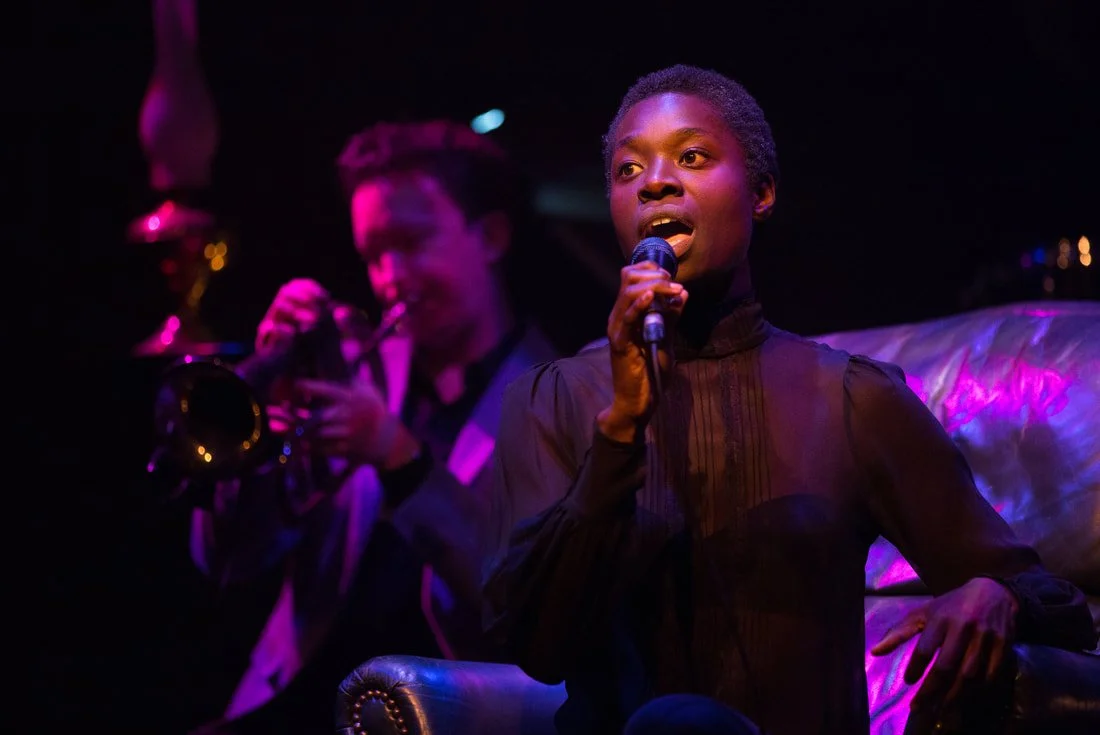
Neema Bickersteth brings Joplin & Jazz to Jazz at the Fort Garry Hotel on Sunday, October 25, exploring the meeting points between Scott Joplin, jazz, opera and art song.
🎧 Listen Along: Pianist Grant Simpson has curated a playlist tracing the journey from ragtime through blues, New Orleans styles and into stride piano — the musical path that helps set the stage for this week’s look at Scott Joplin and Neema Bickersteth’s genre-crossing approach. Listen to Grant Simpson Selects on Spotify»
What do you call a classically trained singer who moves freely between opera, jazz, theatre, movement and performance art? Neema Bickersteth calls herself a “singer plus.”
“I describe myself as a singer who studied classically and loves to intersect with other things,” Bickersteth says.
That openness wasn’t necessarily the plan when she completed her formal training. Like many young classical singers, Bickersteth initially imagined a more straightforward progression from university into an opera career.
Instead, she discovered that a creative life rarely unfolds so neatly.
After school, she began saying yes to whatever came along. Part of that was practical — a young artist finding ways to work — but it also became an artistic philosophy.
“I fairly quickly just opened up to just saying yes to anything,” she says.
Those yeses led into theatre, contemporary performance and eventually projects that combined singing with movement. Even when she found herself in unfamiliar territory, the voice remained the thing that brought her back to herself.
“There was a lot of feeling like, ‘I don’t even know what I’m doing. Why am I even here?’” she recalls. “But then I get to sing at some point, and that would ground me.”
That instinct to cross boundaries has shaped the way Bickersteth approaches jazz as well.
She grew up listening to singers including Ella Fitzgerald and Sarah Vaughan, but she is less interested in defining where one genre ends and another begins. To her, jazz can function much like theatre: a large enough space for different practices, histories and approaches to coexist.
“What is jazz now?” she asks. For Bickersteth, part of its appeal is precisely that openness.
“The conventional boxes that existed, I didn’t just fit into them and sit there comfortably.”
“It’s such an experimental form,” she says. “It also feels like a very inclusive place, where people can just bring what they do and play.”
What Bickersteth brings is a classically developed voice, an appetite for experimentation, and a range of influences that don’t always fit comfortably inside the same category.
“The conventional boxes that existed, I didn’t just fit into them and sit there comfortably,” she says. Over time, recognizing how broad those musical and cultural “umbrellas” could be helped her find a sense of belonging on her own terms — which allowed her to extend her artistic vocabulary beyond her voice, and to “sing with the whole body.”
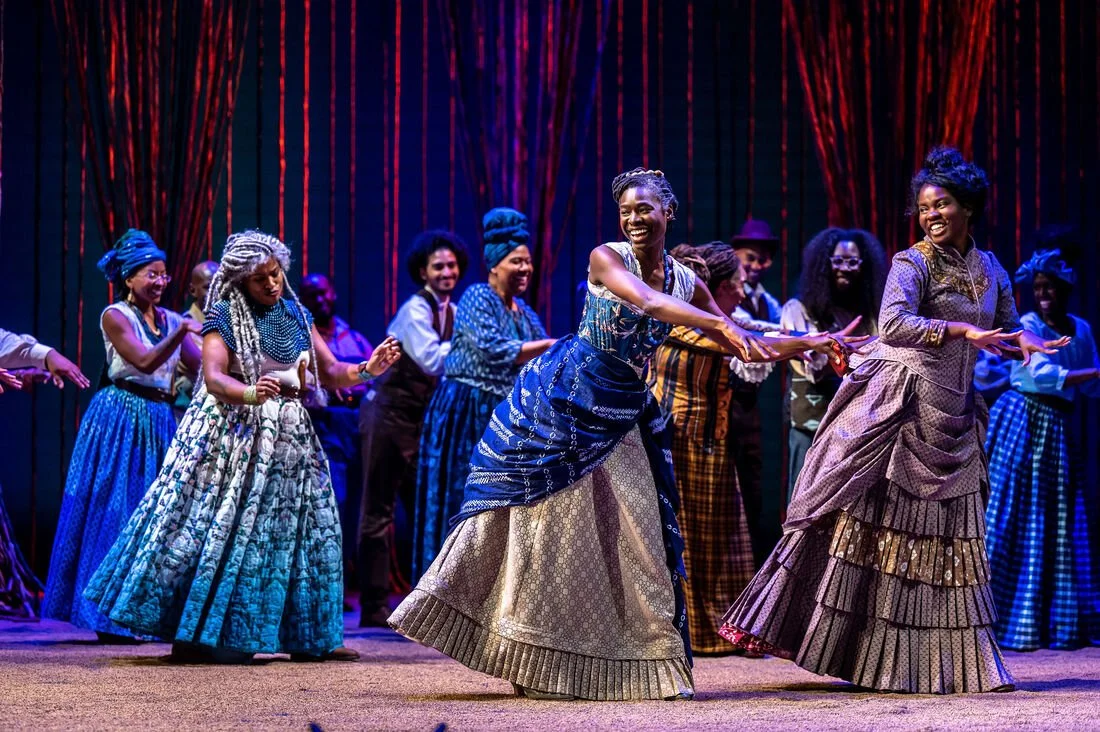
Movement has always been part of how Bickersteth communicates. In Treemonisha, she brings that physicality into the performance, blending classical singing with movement and theatrical expression.
As a child, she wanted to dance but trained primarily as a singer. As an adult, she found ways to bring the two impulses together, including work that paired classical singing with physically demanding contemporary movement.
At first, she resisted calling herself a dancer. Eventually, collaborators pointed out the obvious: she was, in fact, dancing.
Looking back, Bickersteth sees movement less as an additional discipline than another form of communication she had been using all along.
“I talk with my body,” she says. “Sometimes I cannot find the words that I want to say, but I’m acting it out with my body. I’ve always communicated through movement and through my body.”
That physicality can become choreography, but it can also be as subtle as a gesture or a shoulder moving naturally while she sings. Either way, it belongs to the same expressive vocabulary as the voice.
Bickersteth often found her sense of belonging between traditions: she born and raised in Alberta to parents from Sierra Leone. Sierra Leonean culture was present at home, while the wider culture around her in Alberta during the 1980s and ’90s looked very different.
As her career developed, she became increasingly aware that her artistic identity was being shaped by several overlapping traditions: classical music, African culture, broader Black cultural traditions, theatre and the many musical forms she encountered along the way.
Rather than finding one box that accommodated all of them, she learned to work between them — and that makes Scott Joplin an especially interesting composer for Bickersteth to encounter.
“My singing voice is a direct connection to my inner voice.”
She is currently returning to Treemonisha, having previously performed the reimagined production in Toronto in 2023 and Chicago in 2025. What fascinates her about Joplin is his own willingness to gather musical knowledge from different places and bring it together.
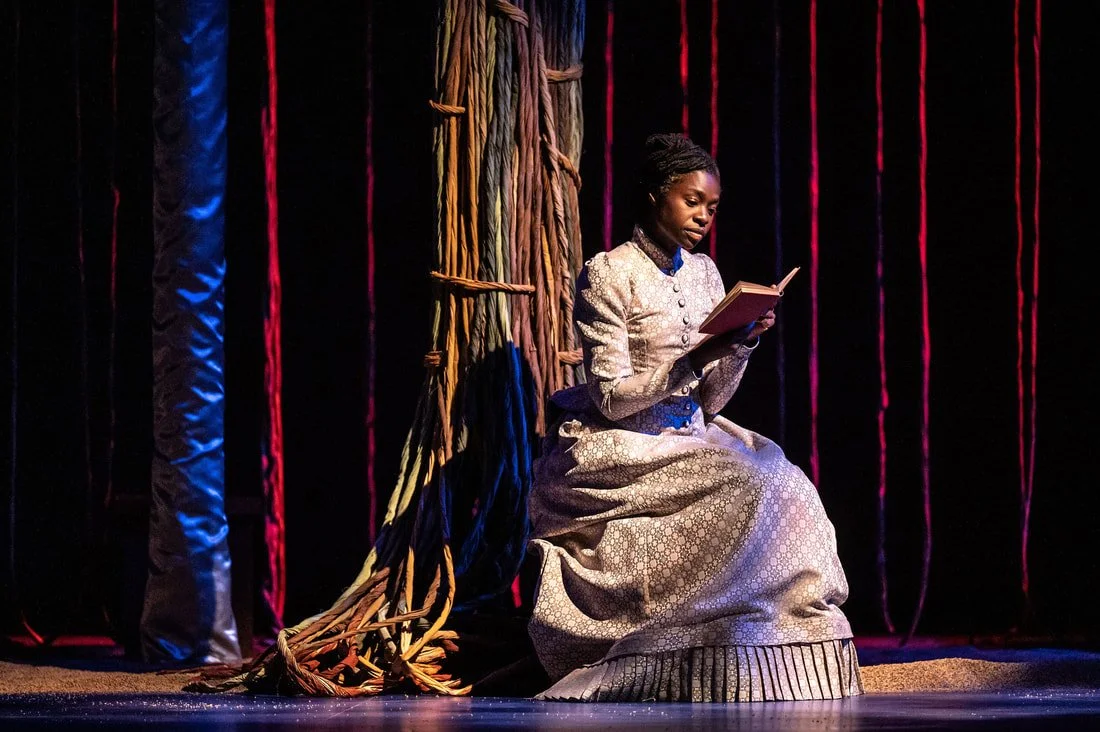
As Treemonisha, Neema Bickersteth steps into a role shaped by learning, leadership and possibility — bringing Scott Joplin’s work to life for contemporary audiences.
“I love how he brought together all of the things that he’s gathered, that he knows,” she says.
The reimagined Treemonisha extends that idea, incorporating West African instruments and moments of improvisation alongside Joplin’s original music. For Bickersteth, these aren’t foreign additions so much as part of a longer musical lineage.
“That music, that style of music is older than Joplin,” she says. “Those instruments that those musicians are using are older than Joplin. And that’s what influenced American music. It is totally all connected.”
That same spirit will inform Joplin & Jazz at Jazz at the Fort Garry Hotel, where Bickersteth will draw from repertoire connected to Joplin’s life and themes while allowing audiences to hear her voice in several different forms.
For all the discussion of genres, though, she ultimately comes back to something simpler.
“My singing voice, my voice, is a direct connection to my inner voice,” she says. “You know, like my soul. So I’m going to be sharing myself with everyone. I just always hope for connection.”
Perhaps that is the clearest meaning of “singer plus.”
The “plus” can change — opera, jazz, movement, theatre, Joplin, improvisation — but the voice remains the through-line.
Neema Bickersteth performs Joplin & Jazz at Jazz at the Fort Garry Hotel on Sunday, October 25 at 7:00 PM, presented in advance of Manitoba Opera’s Treemonisha: A Musical Reimagining.
You Help Create Space for Artists to Explore
For Neema Bickersteth, music is about connection — between traditions, between artists and audiences, and between the voice and something deeply personal.
“My singing voice is a direct connection to my inner voice,” she says. “I just always hope for connection.”
Your donation helps Jazz Winnipeg create space for artists to experiment, collaborate and share work that audiences might not experience anywhere else.