A century after George Gershwin wrote many of his most enduring songs, pianist Anthony D’Alessandro is still finding room inside them — for new grooves, new collaborators and the kind of spontaneity that keeps familiar music alive.
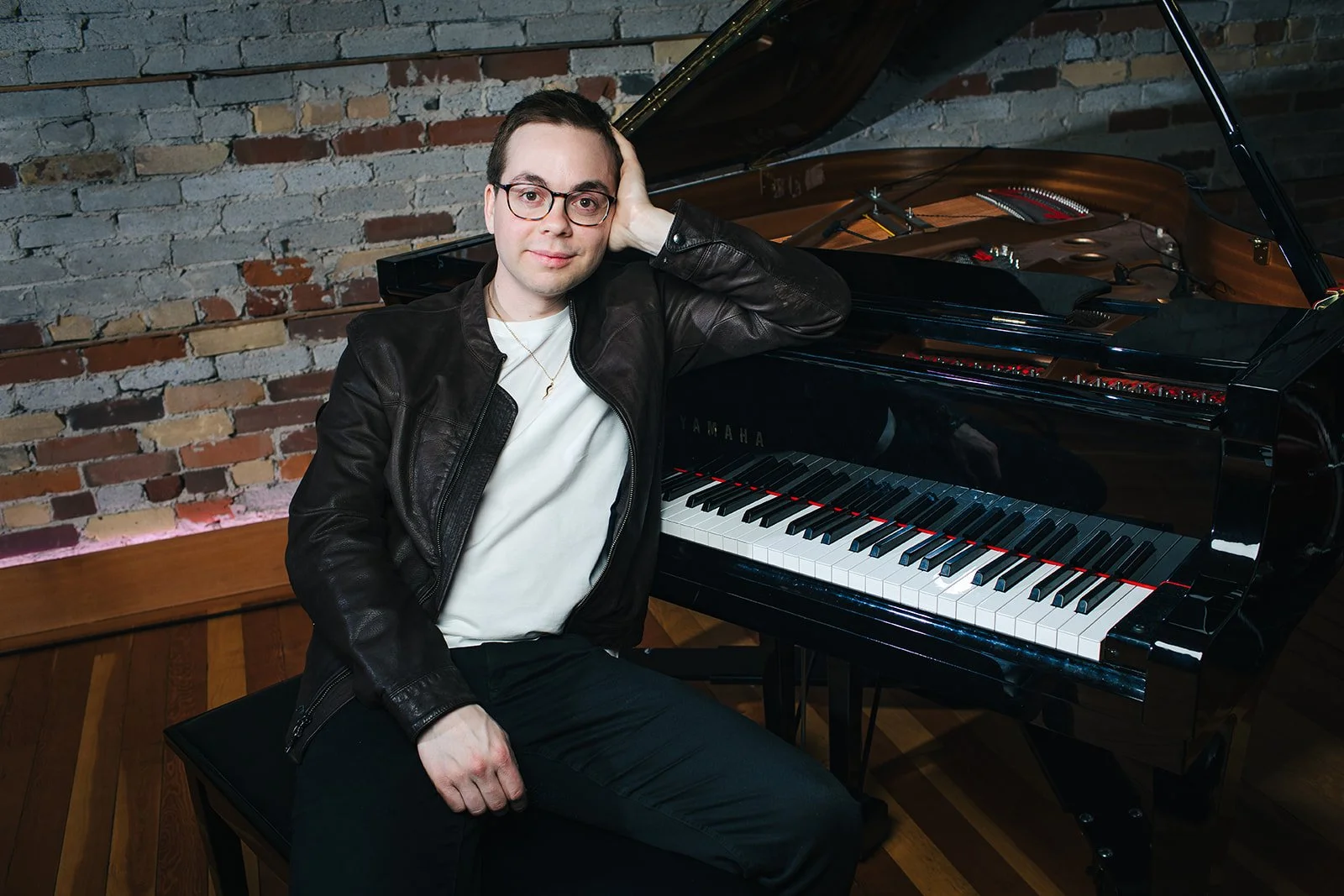
Toronto pianist, composer and bandleader Anthony D’Alessandro brings Anthony D’Alessandro Plays George Gershwin to Jazz at the Fort Garry Hotel on Sunday, Nov. 8.
🎧 Listen Along: Anthony D’Alessandro has put together an almost entirely George Gershwin playlist featuring some of his favourite tunes and interpreters — including Oscar Peterson, Ella Fitzgerald, Louis Armstrong and Art Tatum. “It hints at many of the pieces we’ll perform for you at the Fort Garry,” Anthony says. “I may have even snuck in one or two of my own.” Listen to Anthony D’Alessandro Selects on Spotify»
Anthony D’Alessandro has a pizza theory about George Gershwin.
The Toronto pianist, composer and bandleader points to the strength of Gershwin’s melodies, harmonies, rhythms and forms as the reason musicians can keep returning to the music almost a century later without exhausting its possibilities.
“When you’re making pizza and you have the best raw materials, you have a lot of freedom with what you can do with that pizza,” he says.
It’s an unexpectedly useful way to describe Anthony D’Alessandro Plays George Gershwin, his newest project and the focus of his Nov. 8 performance at Jazz at the Fort Garry Hotel.
The songs are sturdy enough to withstand experimentation. In the show, Summertime begins close to its familiar form before the band pulls it somewhere else entirely. For D’Alessandro, the point isn’t to replace what made the original work, but to see how much possibility is already contained inside it.
Gershwin’s music also brings D’Alessandro back toward the kind of repertoire that first attracted him to jazz.
He began piano through the Royal Conservatory tradition, building a classical foundation he remains grateful for. But by 11 or 12, his ears were drifting toward the jazz-influenced sounds of artists like Billy Joel and Elton John. He started teaching himself songs by ear and working out chords on his own.
Eventually, spending months trying to perfect a single classical work began to feel restrictive.
“I really liked the freedom that jazz allowed, where you could pick your own notes, you could improvise,” he says. Once he discovered that freedom, “I knew that was my calling.”
That same instinct guides the way he approaches a standard. Sometimes he listens to multiple interpretations until an idea catches his ear. Other times, a groove or texture from somewhere completely different suggests a way into the song. Then he takes the idea to the piano, followed by the band, where the arrangement gets worked out collectively rather than remaining fixed in his head.
“Take yourself out of it and just think about the music and just listen, open your ears.”
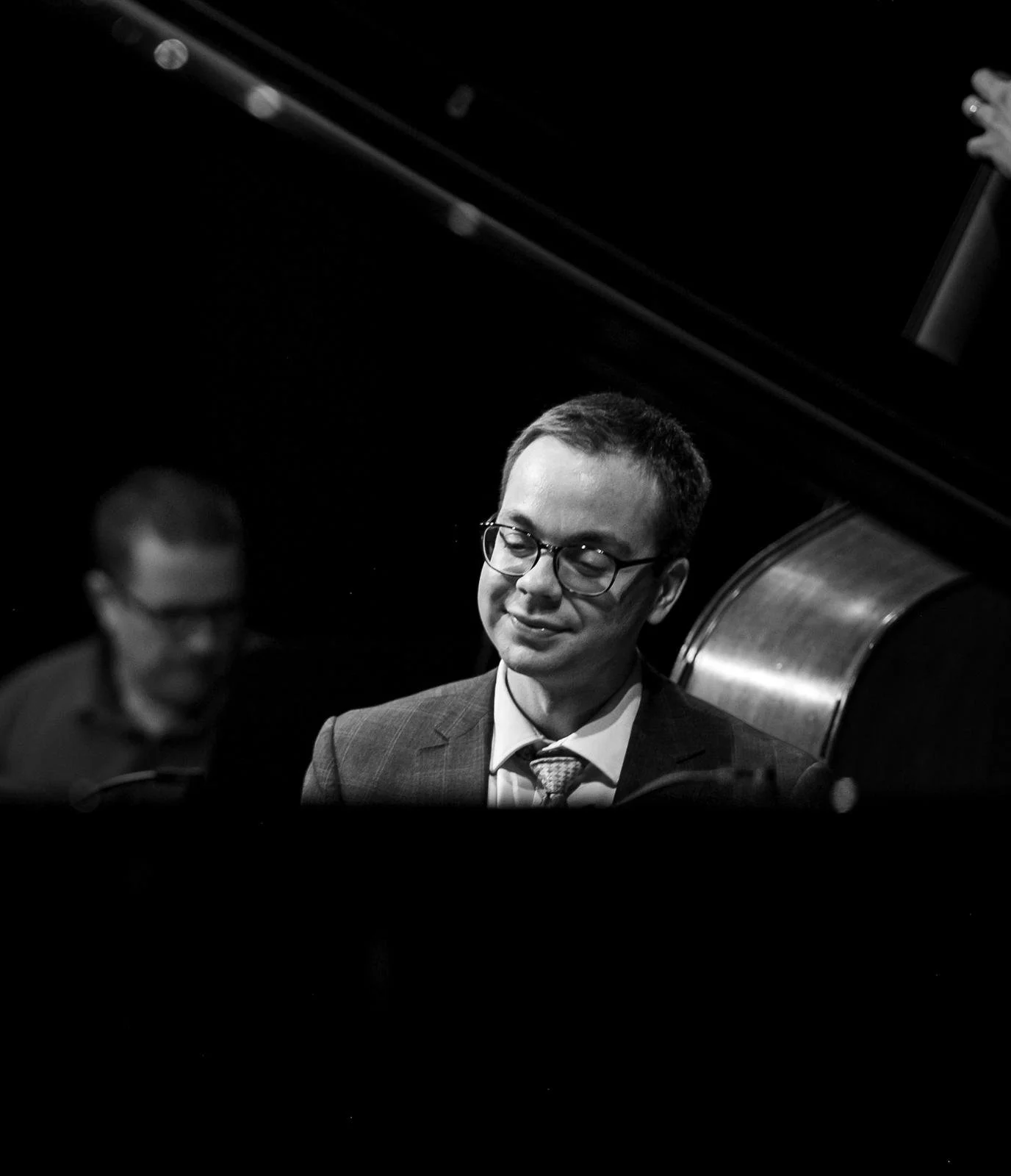
D’Alessandro’s approach to Gershwin balances respect for the original songs with new grooves, arrangements and room for improvisation.
Collaboration has sharpened that instinct.
D’Alessandro has found himself sharing stages with musicians he spent years admiring, an experience that can be equal parts thrilling and intimidating.
“At first, you’re partially sitting there in awe,” he says. “But then I realized, oh, I’m in the band too.”
The solution is to stop thinking about who is beside him and turn his attention back toward the collective sound.
“Take yourself out of it and just think about the music and just listen, open your ears.”
He compares it to suddenly finding yourself on a soccer pitch with Cristiano Ronaldo: eventually, being overwhelmed by the person beside you only gets in the way of the game. Everyone is there trying to accomplish the same thing.
That team mentality will be especially relevant in Winnipeg. Previous visits have generally found D’Alessandro arriving with touring musicians from elsewhere. This time, he’ll be joined by local players Kevin Waters on drums, Julian Bradford on bass and Courtney Fox on vocals.
“I’m looking forward to just feeling how music’s felt by them,” he says.
For D’Alessandro, leading a band also means thinking well beyond the notes.
Composition allows him to disappear into the details of a melody or chord progression. Bandleading brings a much messier mental checklist: the length of the set, the next tune, what to say between songs, whether the musicians made it to the hotel and, occasionally, whether he remembered to check in for tomorrow morning’s flight.
But that extra work matters because he sees the entire performance as part of the music.
“I value the in-between songs as much as I value the actual songs themselves,” he says.
Preparing the Gershwin show meant reading biographies, watching documentaries and returning to original sheet music so he could introduce the audience not only to the songs, but to the person behind them.
“I could feel like, okay, I have the music together, but also the showmanship is just as important, in my opinion.”
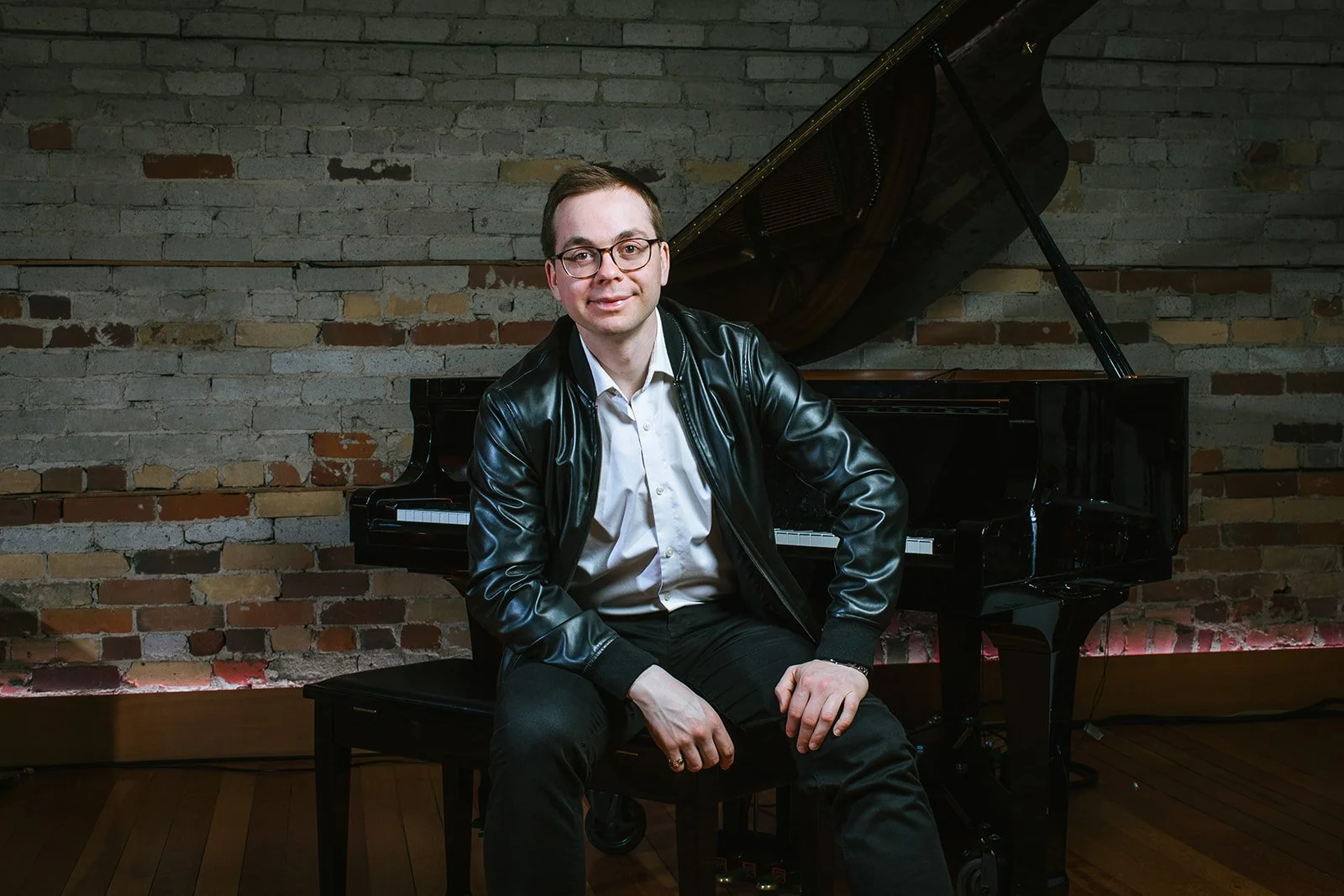
For D’Alessandro, the most rewarding moments happen when the preparation falls away and the band starts responding to one another in real time.
Eventually, all that preparation has to disappear.
When a band is truly swinging, D’Alessandro describes the experience less in technical terms than physical ones.
“It’s kind of the most fun, like it’s the most satisfying feeling in the world,” he says. “It’s freeing. It’s like nothing else matters when you’re really grooving with a band.”
“It’s freeing. It’s like nothing else matters when you’re really grooving with a band.”
Everyone begins to feel the music on the same wavelength. Small details start revealing the musicians themselves — a bass player sliding into a note, an unexpected rhythmic choice, something that makes the others smile or laugh onstage.
“You get to see people’s little personalities come through in the music.”
That balance between preparation and freedom has carried D’Alessandro through very different projects.
His JUNO-nominated City Lights was built almost entirely from original compositions, carefully written and sequenced so the record would feel cohesive rather than like a collection of unrelated tunes. D’Alessandro describes the musicians assembled for it — including trumpeter Summer Camargo and saxophonist Jacob Chung — as a snapshot of “the future a little bit.”
Anthony D’Alessandro reimagines George Gershwin with the swing, spontaneity and playful interplay at the heart of his latest project, Anthony D’Alessandro Plays George Gershwin.
After two records leaning heavily on his own writing, however, he wanted the pendulum to swing.
“I really love playing standard repertoire,” he says. The Gershwin project offered a chance to return to songs people already know and ask what else they might become. His next project, he says, will likely move back toward original music again.
That movement between tradition and invention is part of what keeps the work interesting.
The song provides the raw material. The arrangement gives it direction. The musicians bring their own instincts into the room.
Then D’Alessandro does his best to get out of the way and listen.
Anthony D’Alessandro performs Anthony D’Alessandro Plays George Gershwin at Jazz at the Fort Garry Hotel on Sunday, Nov. 8 at 7 p.m.
You Help Keep the Music Moving
For Anthony D’Alessandro, great jazz starts with listening — musicians responding to one another, taking risks and creating something that only exists in that moment.
Your support helps Jazz Winnipeg create more of those moments by bringing artists and audiences together, supporting live performance and keeping jazz thriving in our city.