For Mauro Sigura and Andrea Manzoni, migration is more than movement from one place to another. In Migrantes, it becomes a way of listening — as oud and piano meet across different musical histories and find something new between them.
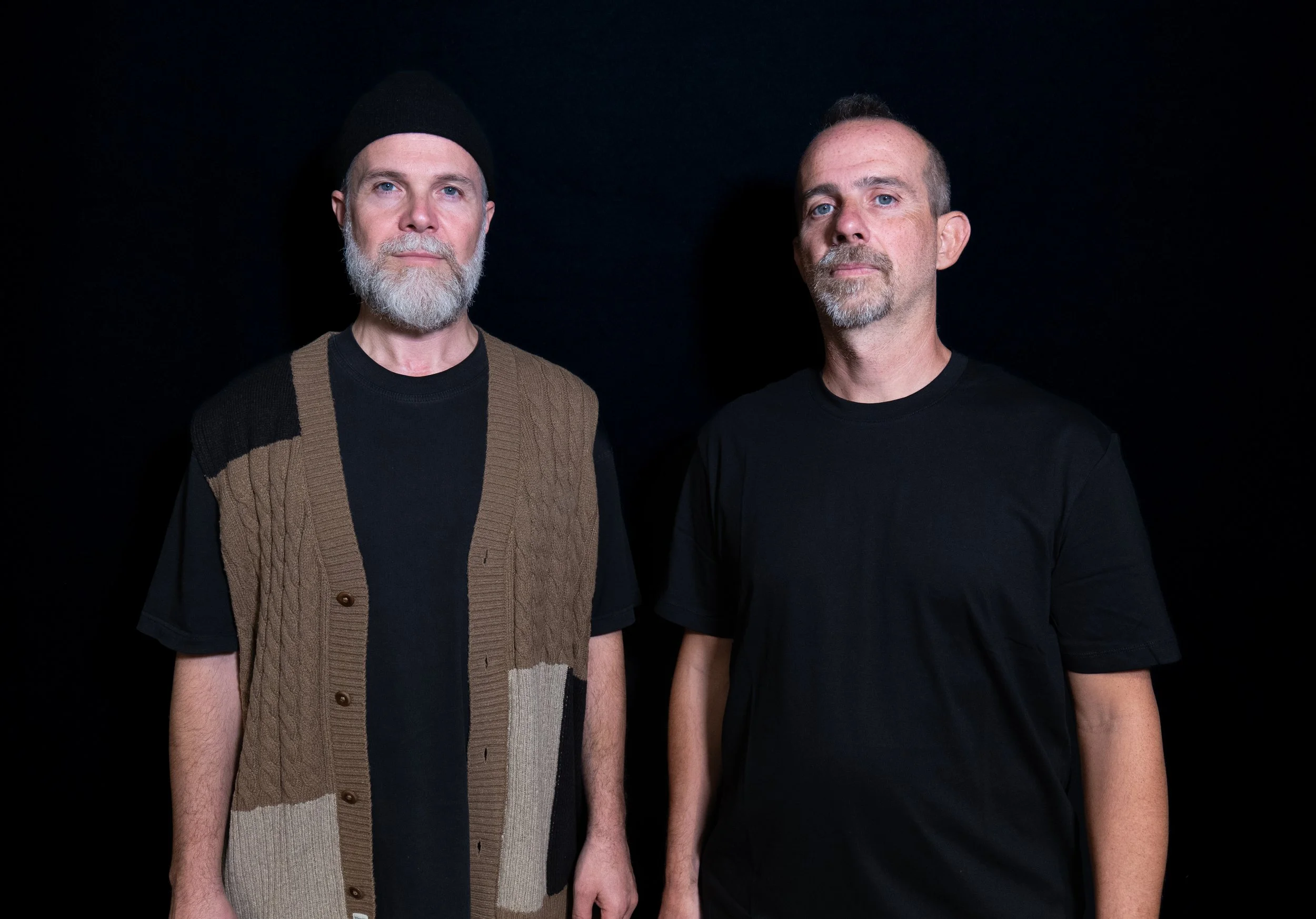
Mauro Sigura and Andrea Manzoni of Migrantes bring oud and piano into conversation across jazz, classical and Mediterranean musical traditions.
🎧 Listen Along: Hear the musical conversation behind the feature. On Migrantes Session 1, Mauro Sigura’s oud and Andrea Manzoni’s piano move between composition and improvisation, drawing on jazz, classical and Mediterranean traditions while leaving room for each instrument to keep its own character. It’s a fitting introduction to the idea at the centre of Migrantes: two distinct voices meeting somewhere in the middle. Listen to Migrants Session 1 on Spotify»
“I meet you, but we find a solution in the middle.”
It’s one of the clearest ways Mauro Sigura and Andrea Manzoni describe Migrantes: not as two musical traditions simply placed side by side, but as an encounter where something new can emerge between them.
That idea began taking shape when the two musicians first played together in Carthage, Tunisia, in 2016.
“We knew each other, but we hadn’t played before,” Sigura recalls. “So we tried to do something, and it was very good.”
There was another isolated performance a couple of years later, but the collaboration largely went quiet until 2024, when Sigura was preparing for a South American tour and wondered what might happen if they returned to it. The name Migrantes, however, had been there almost from the beginning.
“Each of us is migrantes,” Sigura says. Manzoni was born in northern Italy and has since lived abroad, including in Paris, while Sigura moved from Turin to Sardinia. As they continued working together, though, the idea of migration began to expand beyond physical movement.
“The migration is also inside the music,” Sigura says, “because our instruments — piano and oud — are two really different kinds of instruments.”
“The human relation for me is the same relation in music.”
The oud carries centuries of Arab and Middle Eastern musical history, while the piano comes from a very different Western tradition. Rather than asking one instrument to adapt itself completely to the other, the duo began exploring how each could retain its own voice while entering into conversation.
“In the beginning, it was really complicated to imagine how we could do it together,” Sigura says. “Our research goes really deep inside the relation between these two kinds of instruments.”
That research has taken them through different scales, approaches to improvisation and ways of writing together.
“We try to find a personal way to improvise with different scales — Arabic scales, Western scales,” he says. “And we find our way.”
With a laugh, he adds: “Our journey is not finished. Not yet.”
Manzoni brings an equally broad musical background to that conversation.
“I’m not a traditional jazz piano player,” he says. “I studied classical music, I studied composition and I studied Armenian music a little bit, Arabic music, pop music also. I have many kinds of influences.”
In Migrantes, he often approaches the music almost as chamber music, bringing classical ideas into the same space as improvisation.
“What I try to do with Mauro is create some chamber music mixed with Bach — sometimes Brahms, Liszt,” he says. “Take the music from the classical and put it inside our music.”
For Sigura, playing the oud raises a different set of questions. As an Italian musician, he is conscious of working with an instrument whose history is not simply his own.
“I had two ways,” he explains. “One is to play Arabic music, but I’m not Arabic. So it doesn’t work.”
Separating the oud from the scales and traditions associated with it felt equally incomplete because, as he puts it, “you are not talking about the history of the instrument.”
Migrantes offered another possibility.
“We chose with Andrea a third part,” Sigura says, “to blend these two kinds of languages.”
What made that possible, he says, was Manzoni’s instinctive response to the oud. In Sigura’s other projects, he often writes detailed parts for the musicians around him, carefully considering how each voice will interact with his instrument. With Manzoni, the process unfolded much more naturally.
“I didn’t write anything for him,” Sigura says. “He found the right voice that can combine and join with my instrument.”
“If you are really concentrated on that, if you are really in the music, the people are coming with you.”
That freedom has grown alongside the musicians’ friendship. For Manzoni, the musical relationship and the human one are closely connected; the better the two know each other, the easier it becomes to respond instinctively in the moment.
“For me, it was the experience of playing a lot of live music with Mauro and going deeper with our personal relation,” Manzoni says. “The human relation for me is the same relation in music. If I know Mauro a little bit more, it’s more simple to try to do something together.”
That familiarity doesn’t make the performance predictable. Quite the opposite.
“Each concert is different.”
Migrantes unfolds in three extended sections built around The Dream, The Hope and The Journey, which the duo describes almost like chapters in a book.
“We try to tell about the idea of migration that we can have,” they explain. “Someone is dreaming, someone is thinking about doing that — how to do that — and someone is trying to move on.”
Each section runs for roughly 20 minutes without interruption before the musicians pause and speak with the audience. The extended form gives the music time to develop gradually, while asking the performers to keep listeners engaged without relying on constant explanation.
“The people go deep, deep inside the music,” Sigura says. “The challenge is to keep the people, to hold the people inside the music during these 20 minutes.”
For him, that connection depends first on the musicians being fully present themselves.
“If you are really concentrated on that, if you are really in the music, the audience is coming with you,” he says. “And that’s happened.”
The movement between styles mirrors the larger idea behind the project. Jazz, classical music, pop, rock and Mediterranean and Arab-Ottoman influences encounter one another throughout the performance, much as travelling can bring people into contact with unfamiliar places, perspectives and ways of thinking.
“The music is always mixed,” they explain. “Different kinds of music — it’s a travel, like a journey. When you meet someone when you are travelling, it’s new and it’s a new experience.”
For the duo, the same kind of encounter can happen between two instruments that initially seem far apart.
“It’s an experience, a new journey, a new meeting,” Sigura says. “We are always meeting each other.”
That brings him back to the image that perhaps best captures Migrantes: two people approaching one another from different directions, with a third possibility forming somewhere between them.
“I meet you,” he says, “but we find a solution in the middle.”
The audience becomes part of that exchange as well. The response changes from country to country, from large theatres to intimate clubs, but the duo often notices the same kind of concentration in the room, with listeners closing their eyes and allowing the music to take them somewhere unexpected.
“Sometimes people are crying at the end of the concert,” they say.
Migrantes doesn’t ask those listeners to arrive already understanding its musical traditions or larger ideas. In fact, Sigura would prefer they leave those expectations at the door.
“Try to come to the concert without any expectation,” he says. “Without any kind of mental barriers about music, about life, about nothing. Try to be free.”
Manzoni extends that idea beyond the performance itself.
“Keep your mind open and don’t be scared about the new experience,” he says. “To see someone, to live something new. The experience is always something that can make you richer than you were before.”
Even when an experience doesn’t lead where you expected, he adds, “you learn something.”
It’s a fitting invitation for Migrantes: two musicians arriving from different directions and listening closely enough to discover what might exist between them.
Help Bring the World to Winnipeg
Migrantes is a reminder of what can happen when artists from different places, traditions and musical backgrounds meet.
Your support helps Jazz Winnipeg bring international artists and new sounds to Winnipeg, while creating opportunities for local audiences and musicians to connect with artists from around the world.