The Bridge: Music as a Shared Language
Rooted in jazz, mentorship, and learning by ear, The Bridge turns music education into a powerful space for belonging.
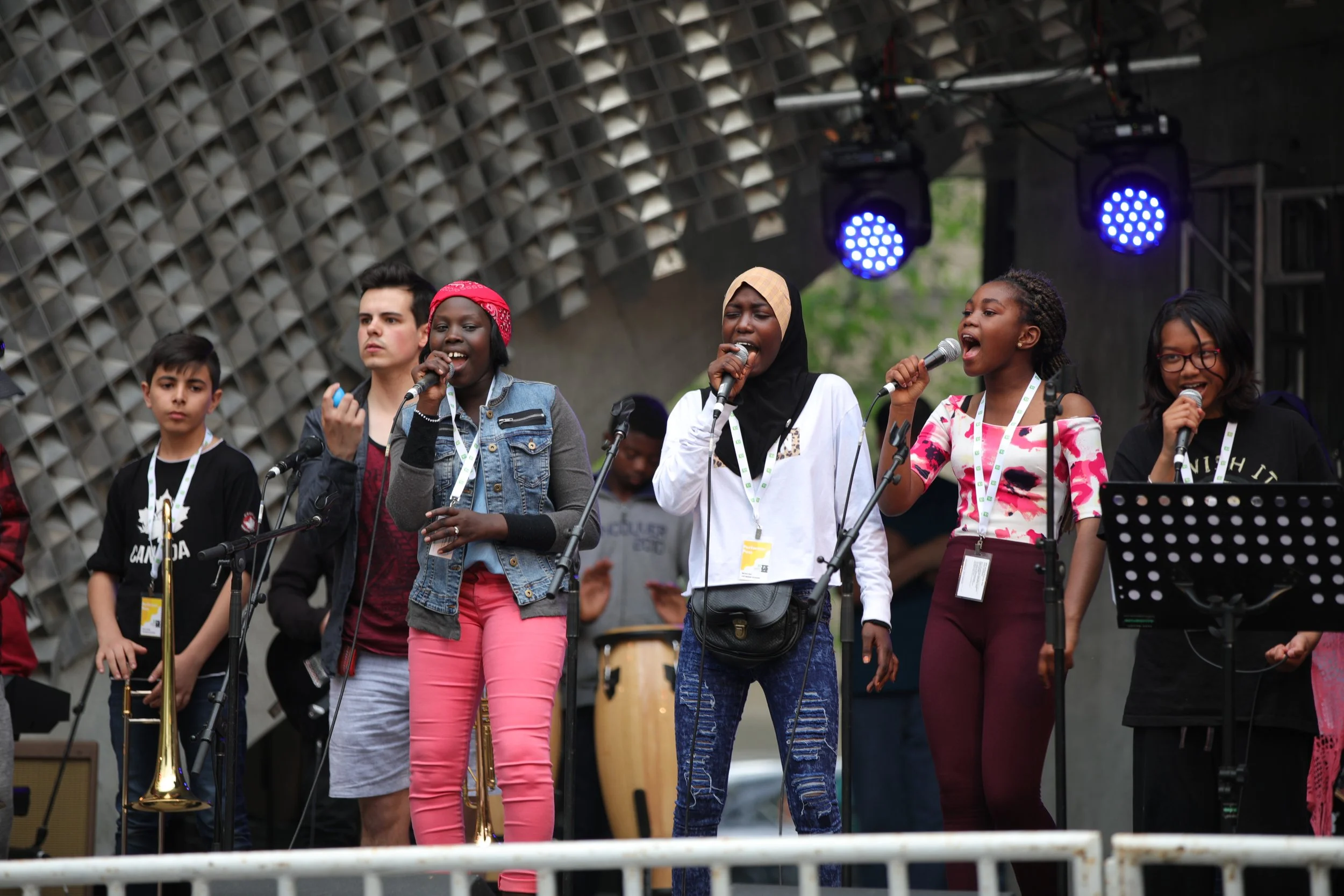
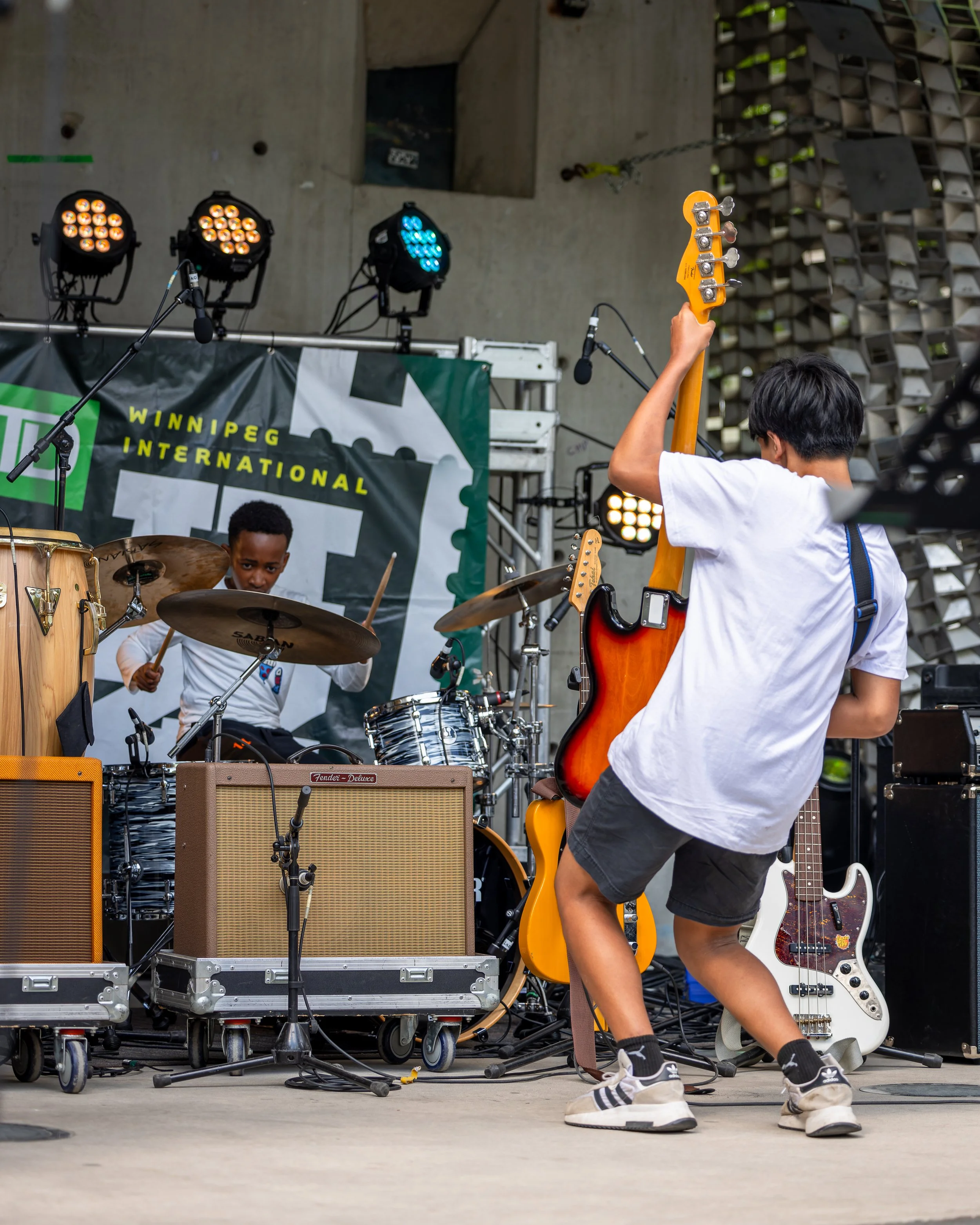
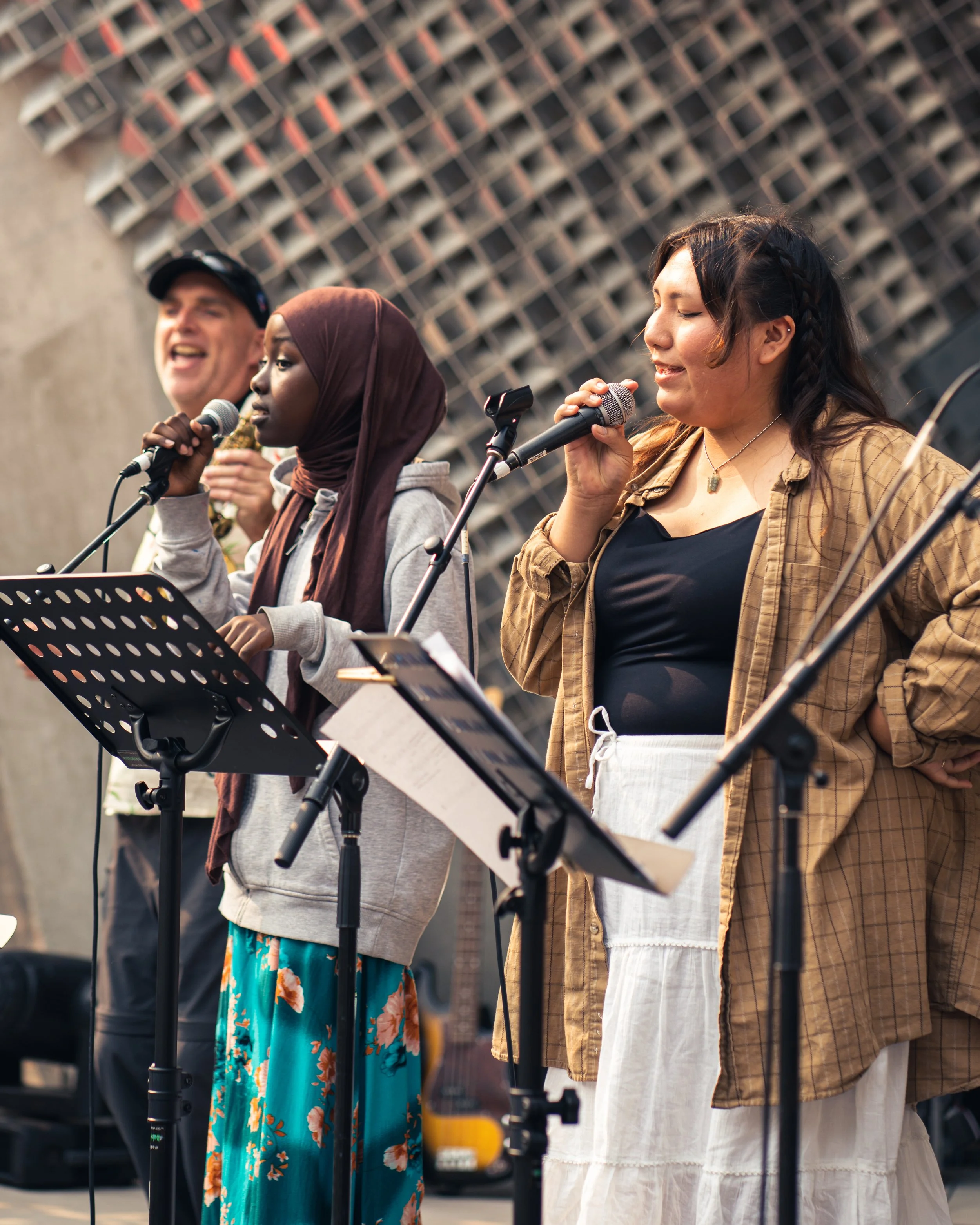
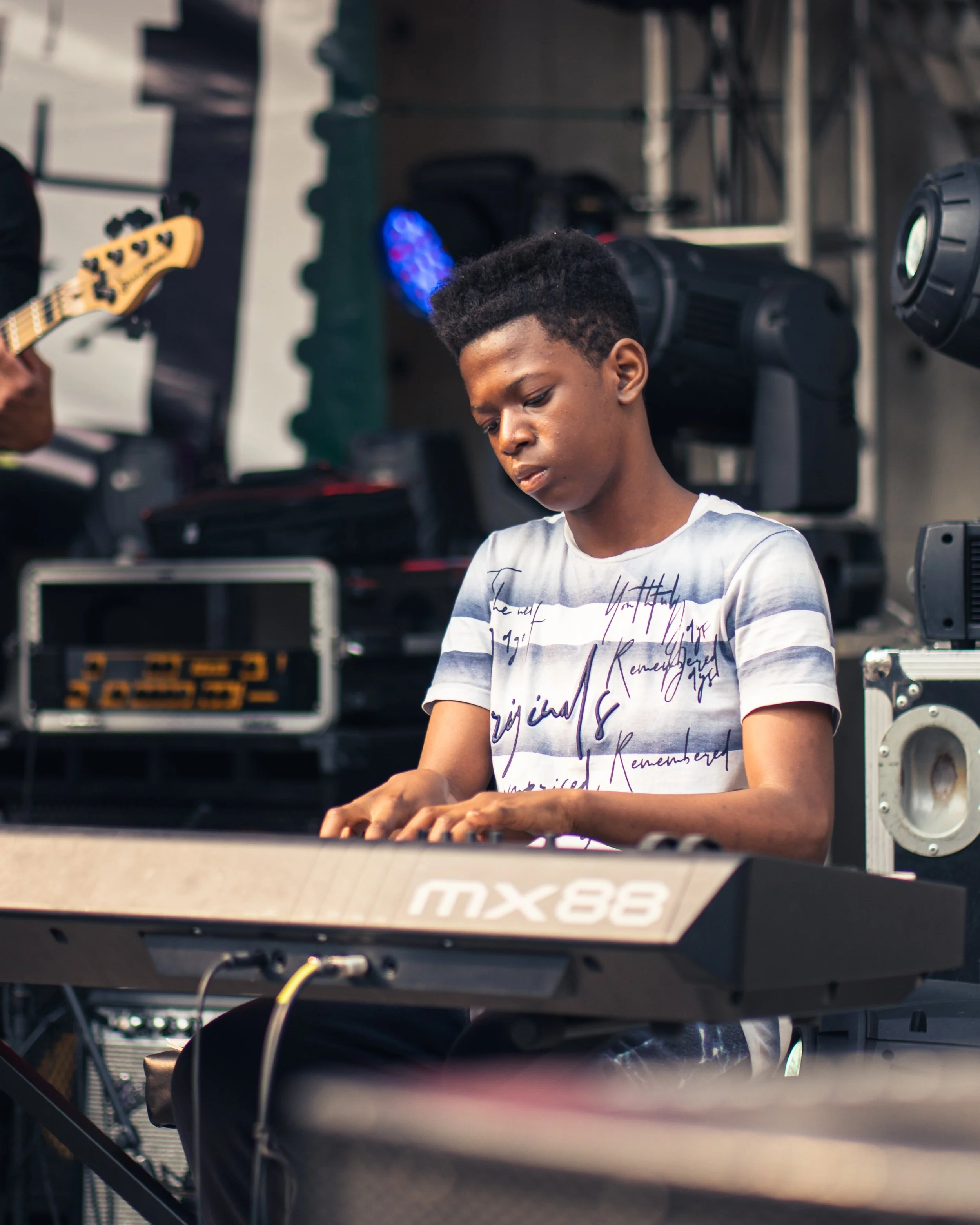
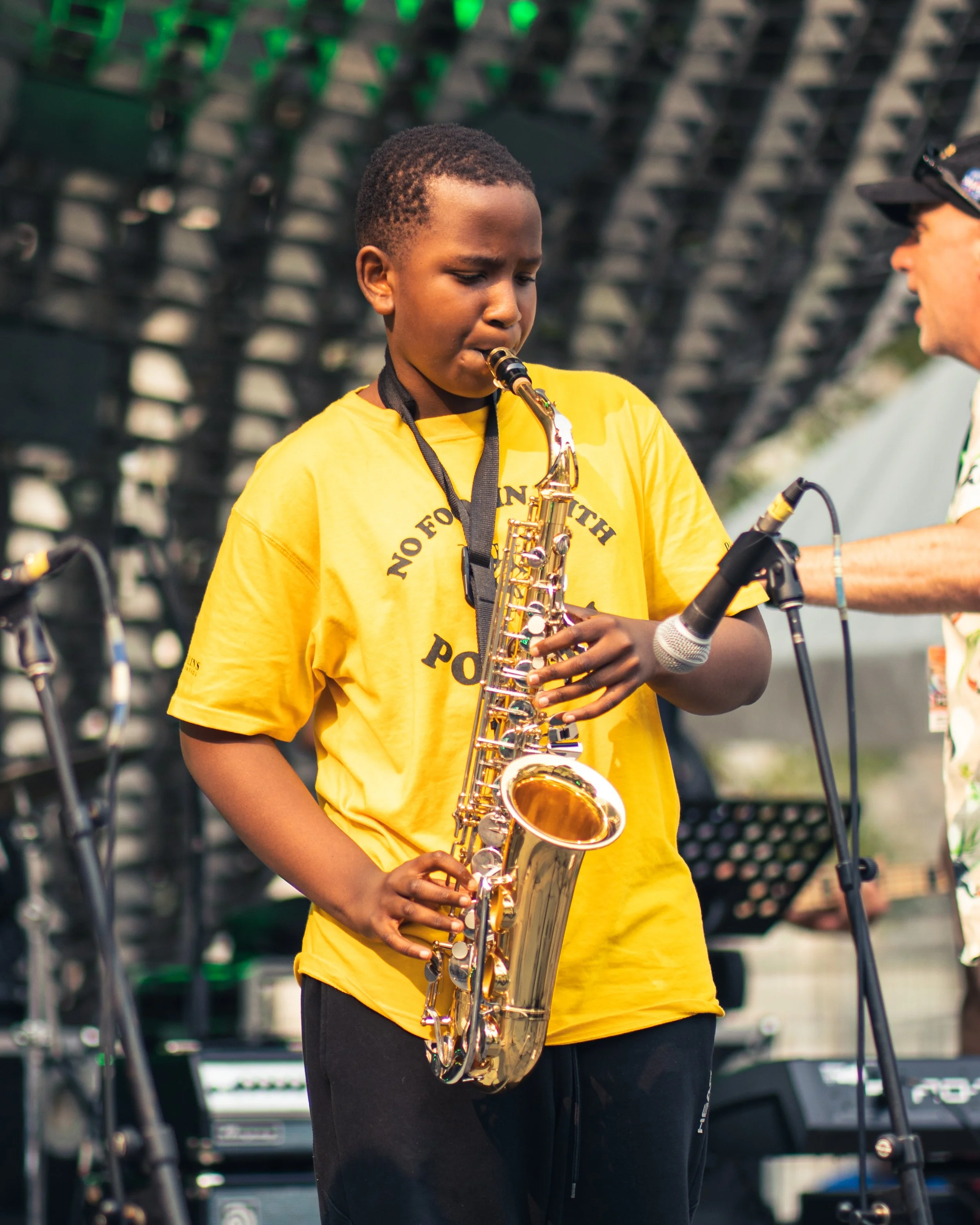
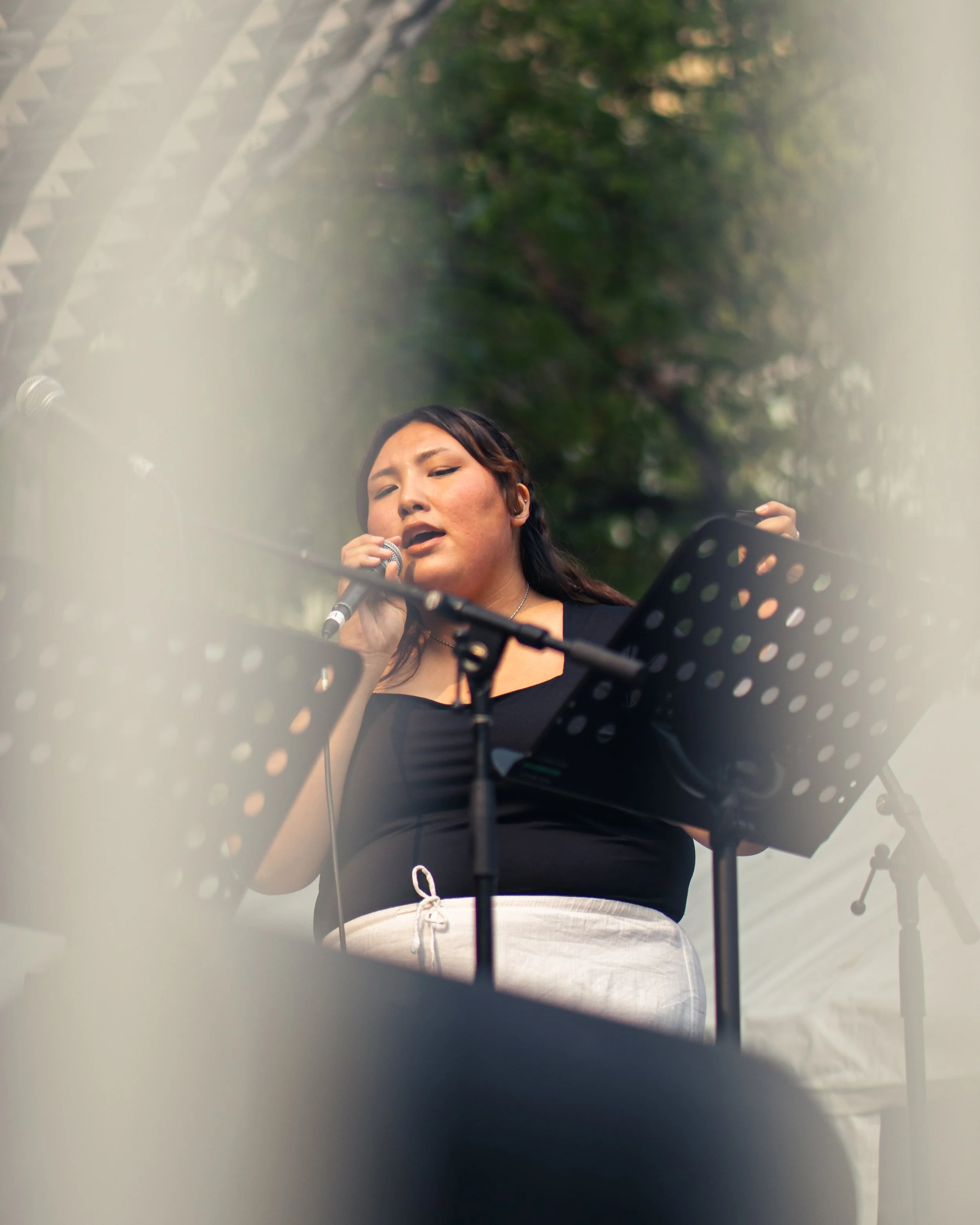
Above: Students from The Bridge program perform at the mainstage at the 2025 Winnipeg International Jazz Festival.
Sometimes, music reaches where words cannot.
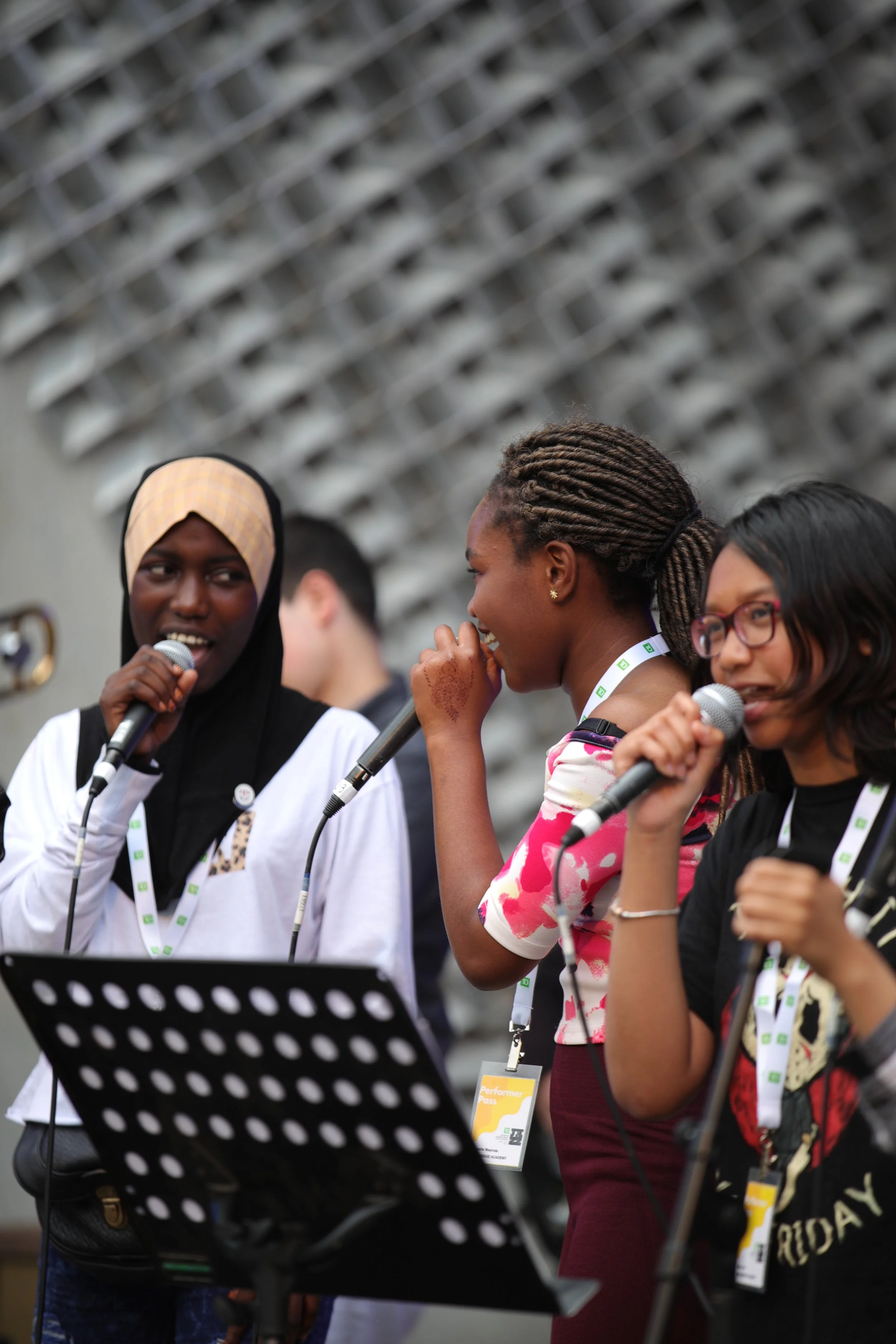
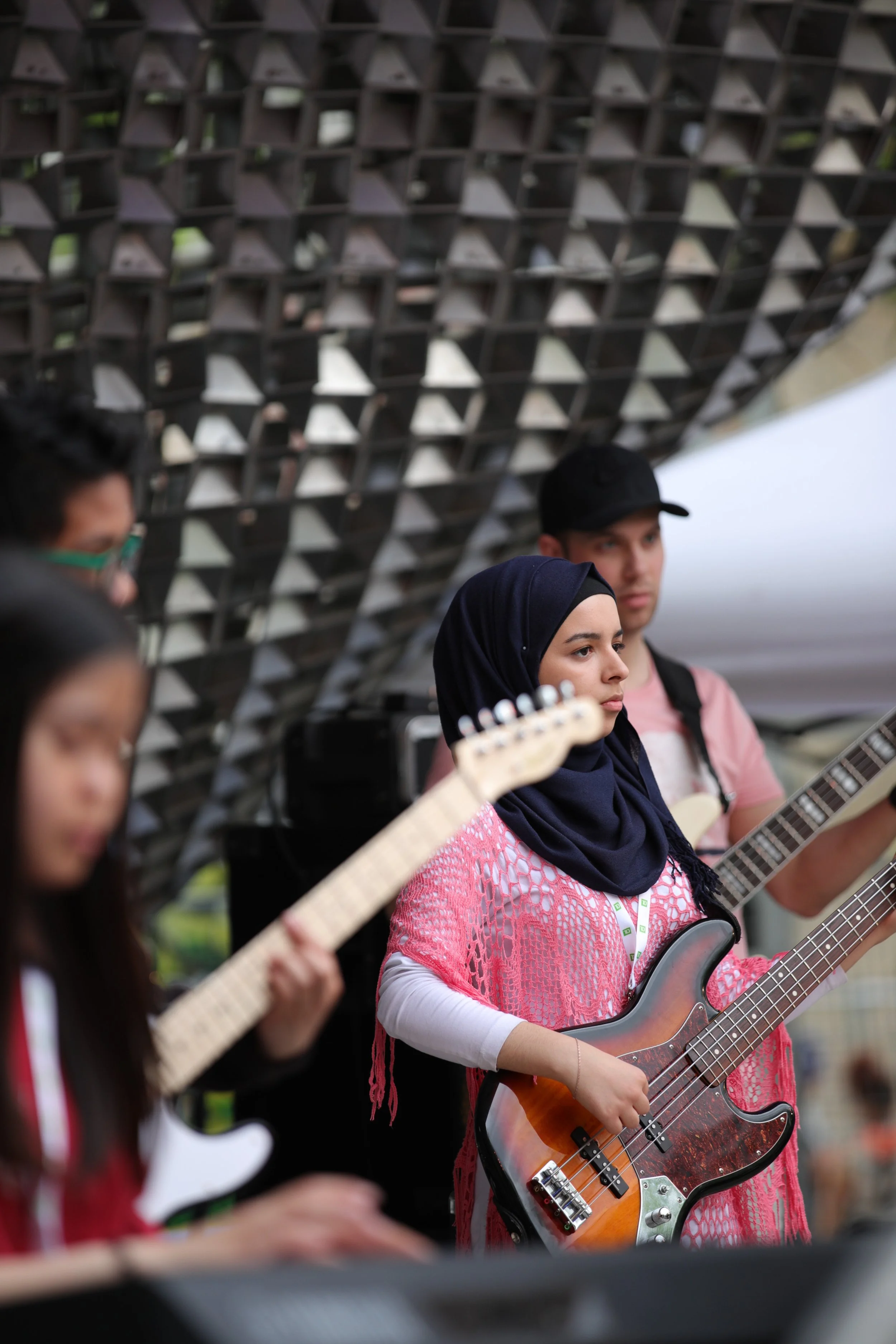
At The Bridge: Music for Life, students from diverse communities come together to listen, respond, create, and perform. Some are new to Canada. Some come from Winnipeg’s urban core. Some arrive with little or no formal music training. Many bring different languages, cultures, stories, and experiences into the room.
What they share is sound.
Based at Hugh John Macdonald School, The Bridge was created to bring meaningful music education to students who might not otherwise have access to instruments or instruction. Over time, it has grown into something more than a music program: a space where students build confidence, leadership, collaboration, and a sense of belonging through the shared language of music.
“Music is a language and, just like any other language, we should learn to speak before we learn to read.”
Led and directed by Neil Watson, The Bridge is rooted in jazz education, mentorship, improvisation, and learning by ear. Rather than beginning with sheet music and theory, students start by listening, playing together, and building rhythm as a group.
That rhythm-first approach grew out of real classroom experience. With students arriving from around the world — and, in one year, 16 first languages spoken in the program — Watson realized that talking about music was not always the most effective way to teach it. The students needed to make music together first.
As Watson explains in the 2021 mini-documentary series about the program, “we stopped learning to play music with our eyes and we started learning to play music with our ears — and it made all the difference.”
That shift changed everything.
Instead of staring at the page, students began learning songs by ear. They focused on rhythm, groove, repetition, and listening to one another. Parts were layered together piece by piece. Eyes moved between bandmates instead of sheet music. Tempos shifted and were caught. Fills were tried, repeated, and refined. Songs took shape through attention, trust, and collaboration.
In Watson’s words, “What evolves over the school-year is more than a set of music; it’s an inclusive community in which everyone has a positive and important role to play.”
Above: No music stands present — The Bridge program director Neil Watson showcases how students learn by ear, rhythm, and feel with a rendition of Jackson 5’s “I Want You Back.”
Learning by ear, building by community
The Bridge’s repertoire is shaped by the students themselves. Songs are drawn from pop, soul, rock, jazz, folk, and global traditions — from Stevie Wonder to Green Day, James Brown to Earth, Wind & Fire, Bruno Mars to songs shared by students from their own cultures and languages.
Because The Bridge learns by ear, the program is not limited by purchased arrangements or traditional beginning-band materials. The ensemble can adapt, arrange, and reimagine music together.
That has led students to perform songs in Arabic, Igbo, Portuguese, Ukrainian, and more. Each song becomes an opportunity for students to bring part of themselves into the room — and for the rest of the group to listen, learn, and join in.
In one of his blog posts documenting the program’s progress, Watson writes about a student named Mostafa, who came to Canada from Syria and suggested the band learn “Endi Anaa,” a song by Syrian pop artist Nassif Zeytoun. The song became a meaningful part of the program’s repertoire, blending Middle Eastern rhythms and melodies with the ensemble’s western instruments (listen to the recording of “Endi Anaa” featuring Mostafa below).
“At its core, this is what The Bridge program is all about,” Watson writes. “We didn’t just learn a pop song from halfway across the world; we created a space where Mostafa’s home could blend seamlessly with his new life in Canada.”
That idea is central to The Bridge: music as connection, memory, identity, and possibility.
Project One World
In 2026, The Bridge released Project One World, a powerful new recording that captures the program’s spirit in sound.
The album brings together students, educators, and guest artists in a collaborative recording project shaped by the classroom as much as the stage. It includes reimagined works such as “Heal the World,” “One Love,” and “Pamoja (Together),” alongside student-driven arrangements spanning jazz, folk, pop, and global traditions.
Each track reflects what The Bridge does best: bringing many voices together and creating something shared.
From global anthems to traditional songs reinterpreted through a student lens, Project One World is a living document of creativity in motion. It is a portrait of a program where young musicians do not just learn music — they help shape it. Listen to the full album on Spotify below.
More than performance
The impact of The Bridge extends far beyond the notes themselves.
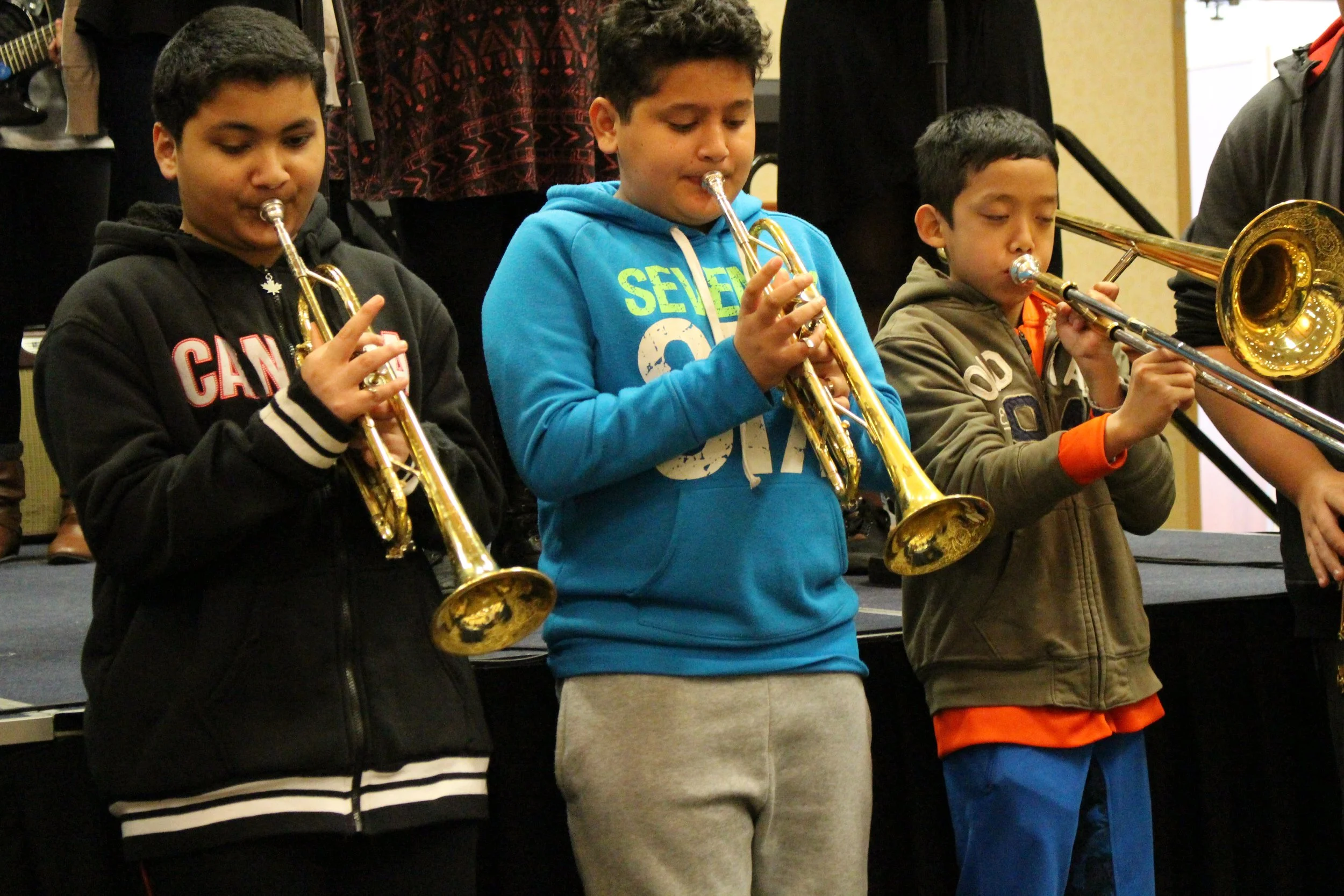
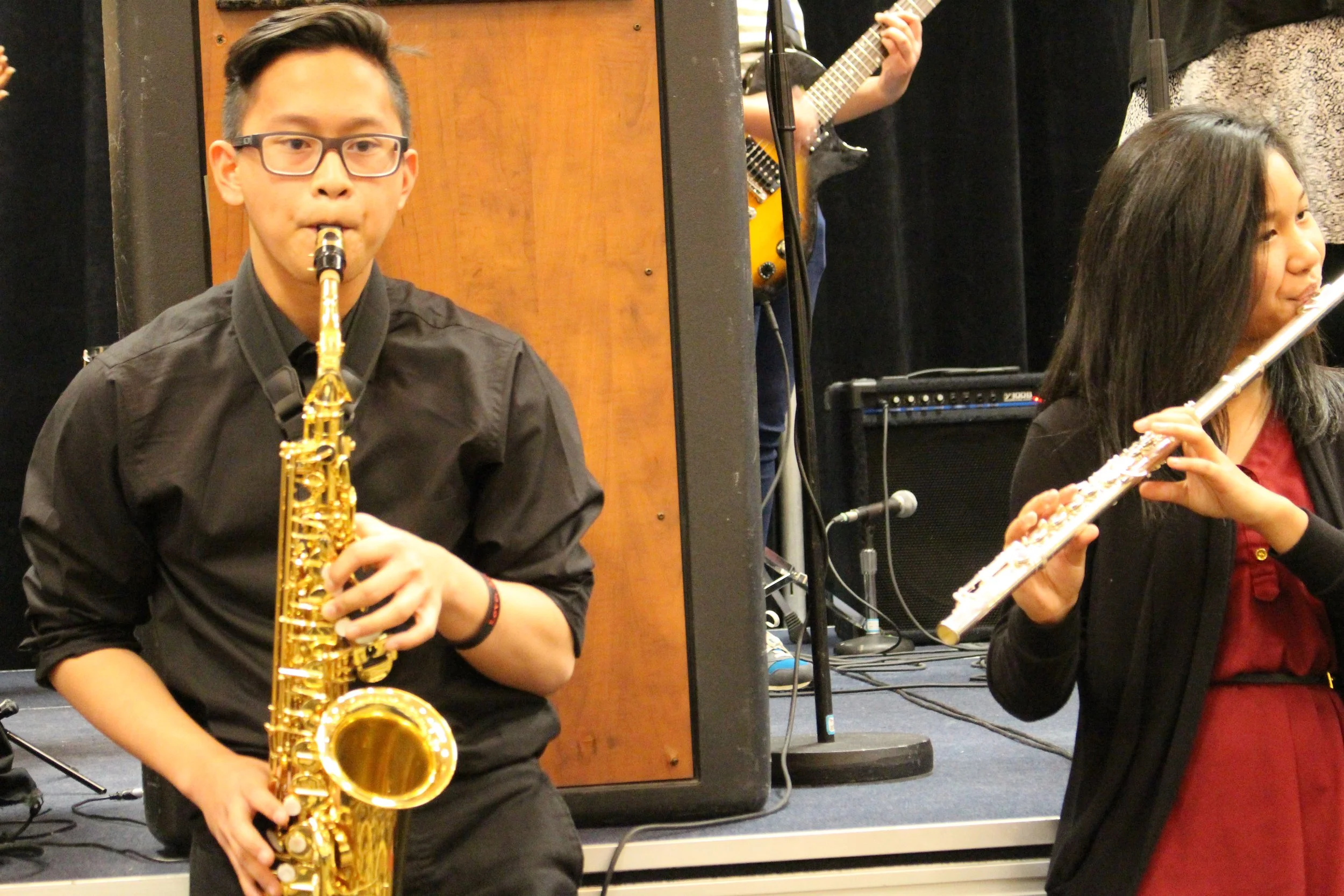
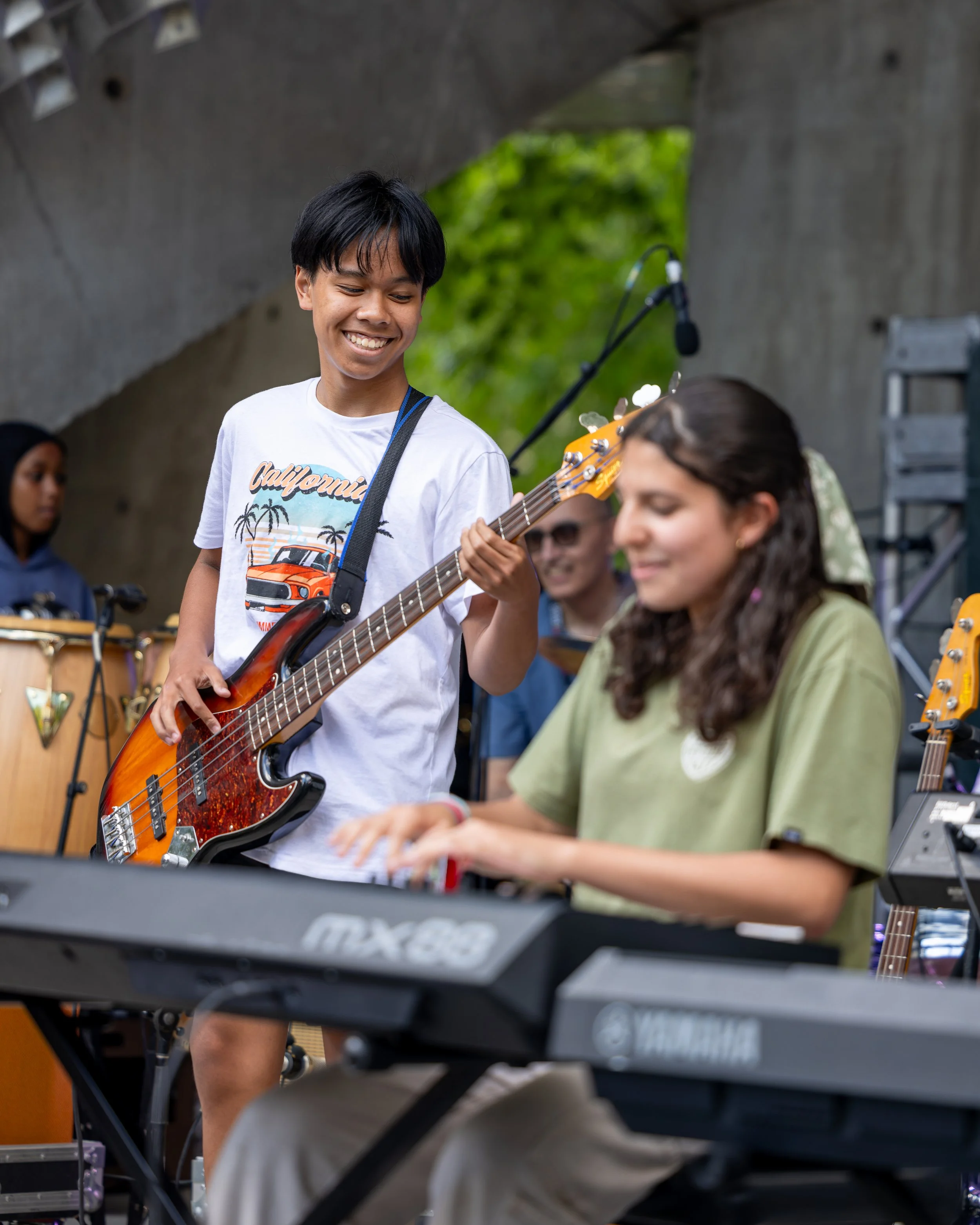
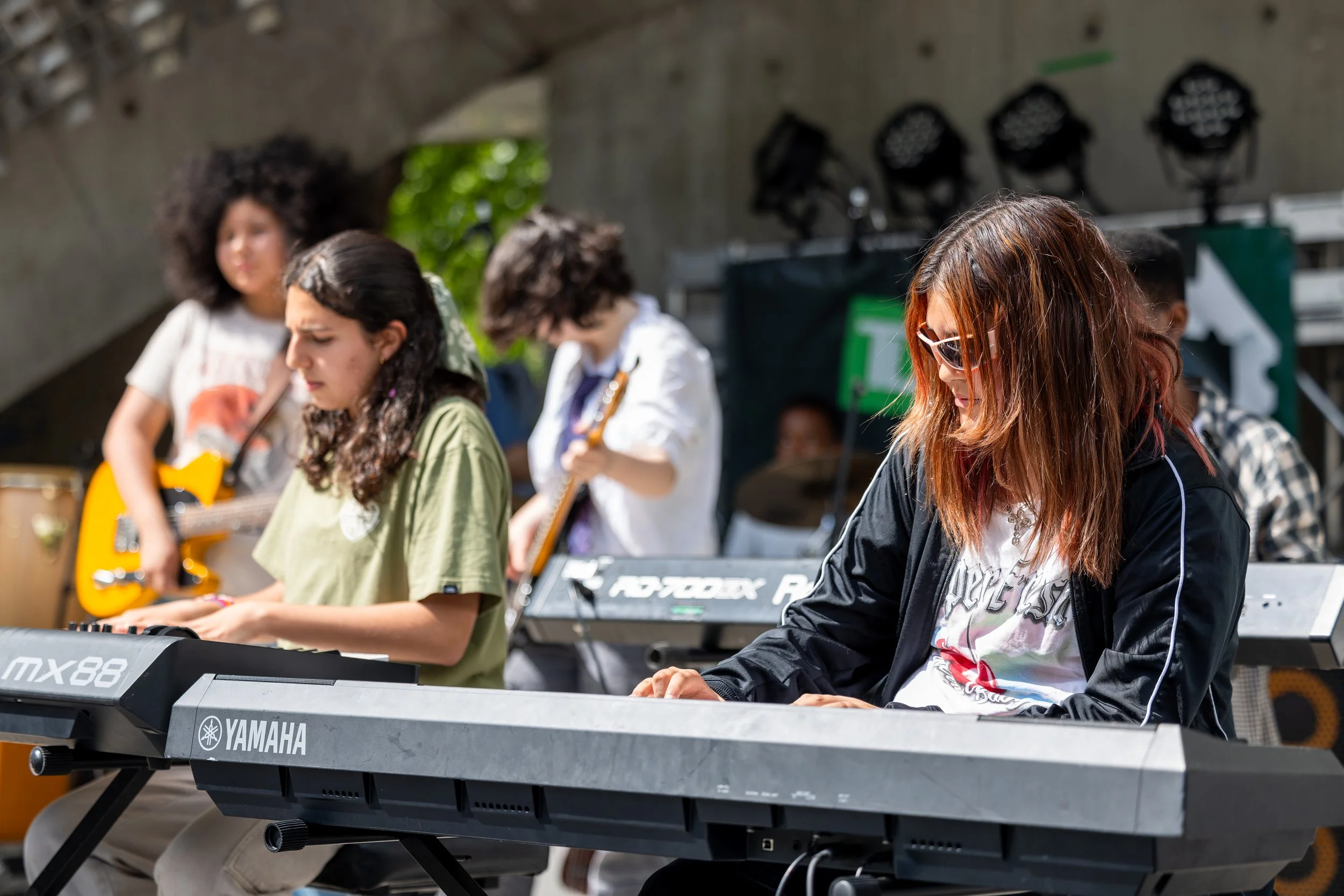
Students build musical fluency and ensemble performance skills, but they also develop focus, confidence, leadership, collaboration, and public presentation skills. They learn how to listen closely, support one another, take creative risks, and contribute to something larger than themselves.
“Performing music on stage for many people has helped me become a lot more sociable.”
That growth comes to life not only in the classroom, but on stage. In May 2026, The Bridge partnered with the Manitoba Chamber Orchestra for Mozart Meets Motown! A Musical Mashup at the West End Cultural Centre — a dynamic, genre-spanning performance created with and for students.
For many young musicians, opportunities like this can be transformative: sharing the stage, working alongside professional artists, and experiencing the energy of a live audience.
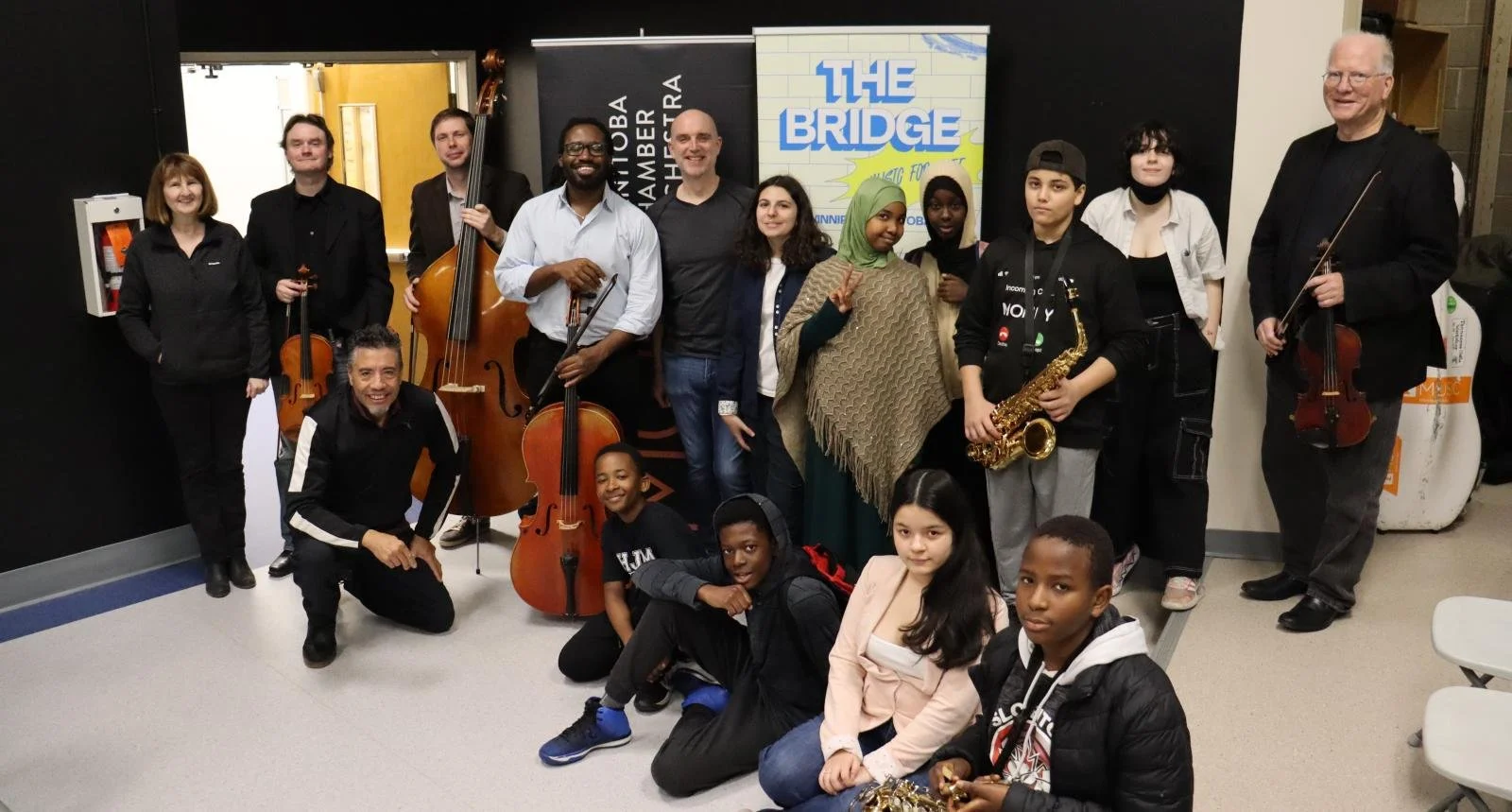
Above: Students from The Bridge program and Neil Watson post with members of the Manitoba Chamber Orchestra ahead of their collaborative concert.
In the documentary series, one student describes the feeling of performing as something deeper than simply liking a song:
“I didn’t really understand what music was to a performer until I was performing it… it becomes this song is happening through me and then people listen to us and like what we play.”
That sense of ownership is at the heart of the program. Students are not just repeating music back. They are finding themselves inside it.
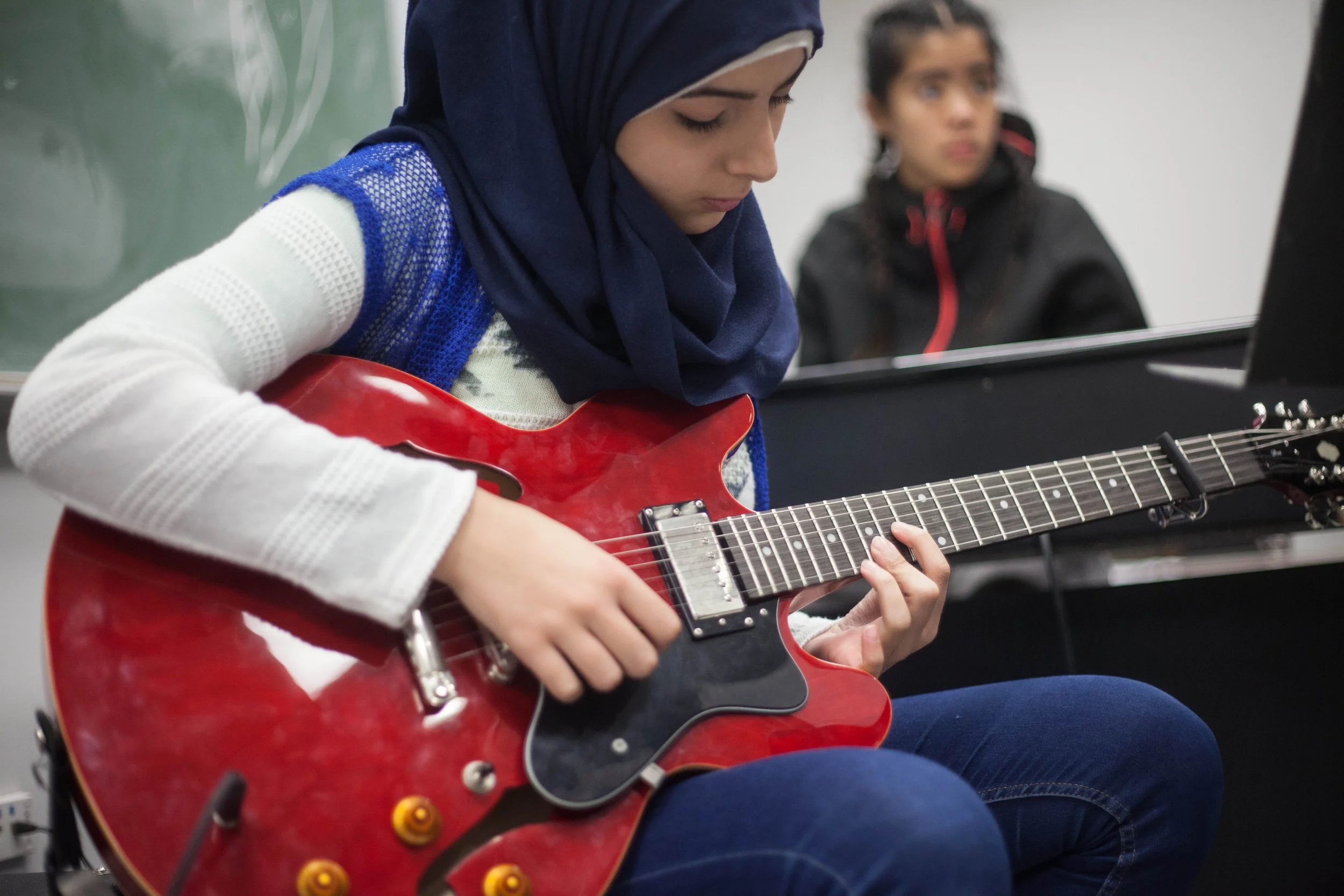
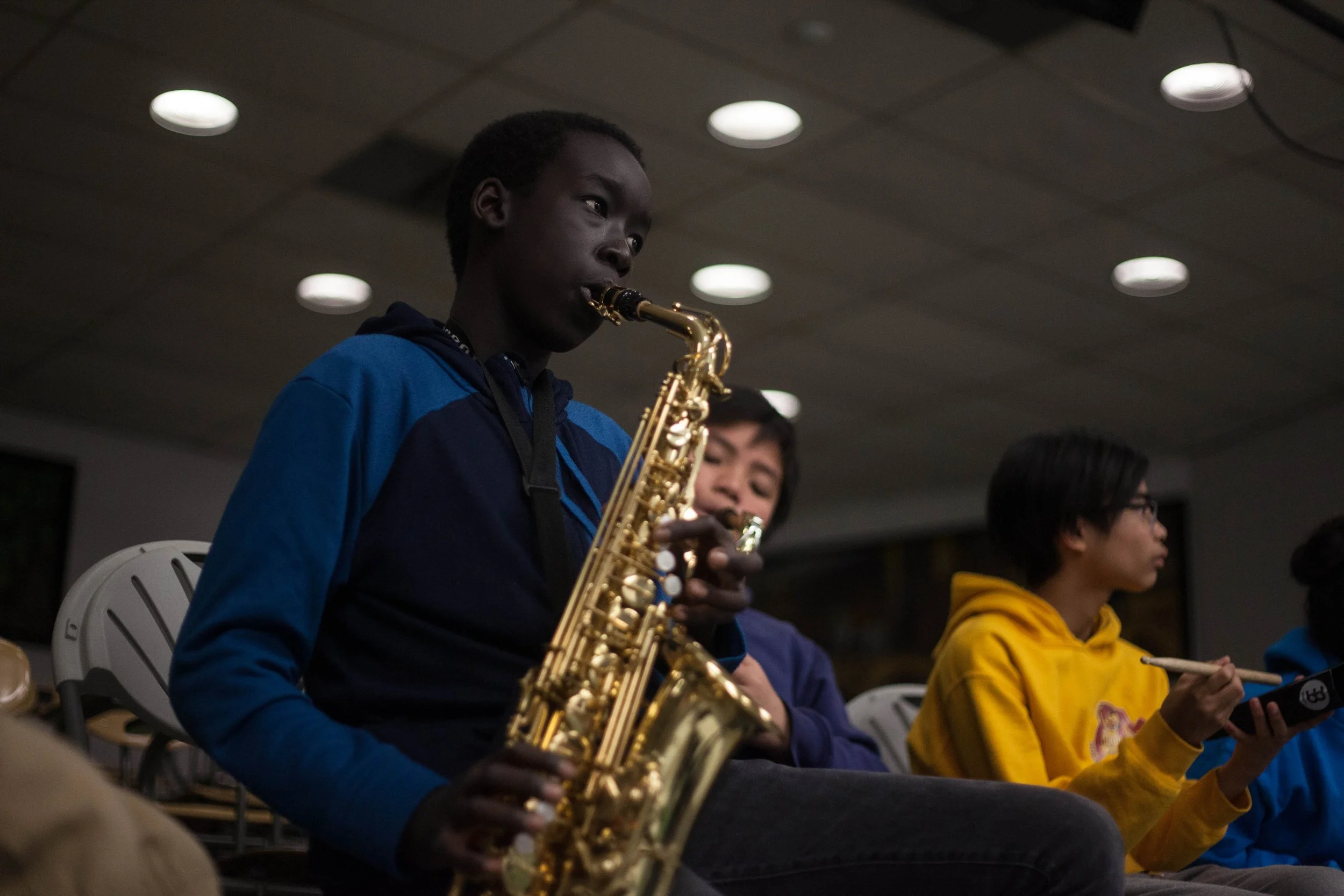
Above: A student from The Bridge program gets a handle on playing a Jazz guitar.
The impact of The Bridge extends far beyond the rehearsal room.
For Wesley Hansen, an alumnus of the program, The Bridge helped build confidence that carried into everyday life.
“It made me grow as a person — and my self-confidence a lot,” says Wesley.
That kind of growth is echoed by Autumn Sumner, another Bridge alumna, who describes performance as a way of becoming more comfortable putting herself forward.
“Performing music on stage for many people has helped me become a lot more sociable,” says Autumn.
For students in The Bridge, performance becomes a way to practise courage: standing on stage, listening to others, contributing to the group, and discovering what it feels like to be heard.
For Watson, those transformations are at the heart of the work. In the documentary, he describes the joy of watching students find confidence and experience the energy created when they perform together for an audience.
“As a teacher,” he says, “when I see a student gain confidence, when I see them find the joy in creating music with other players for an audience, that is truly exhilarating.”
A bridge through music
At its core, The Bridge is about access — access to instruments, instruction, mentorship, performance, and the experience of being part of an ensemble.
But it is also about something deeper.
It is about what happens when students from different backgrounds sit beside one another, listen closely, and build something together. It is about finding rhythm before language, confidence before perfection, and community through sound.
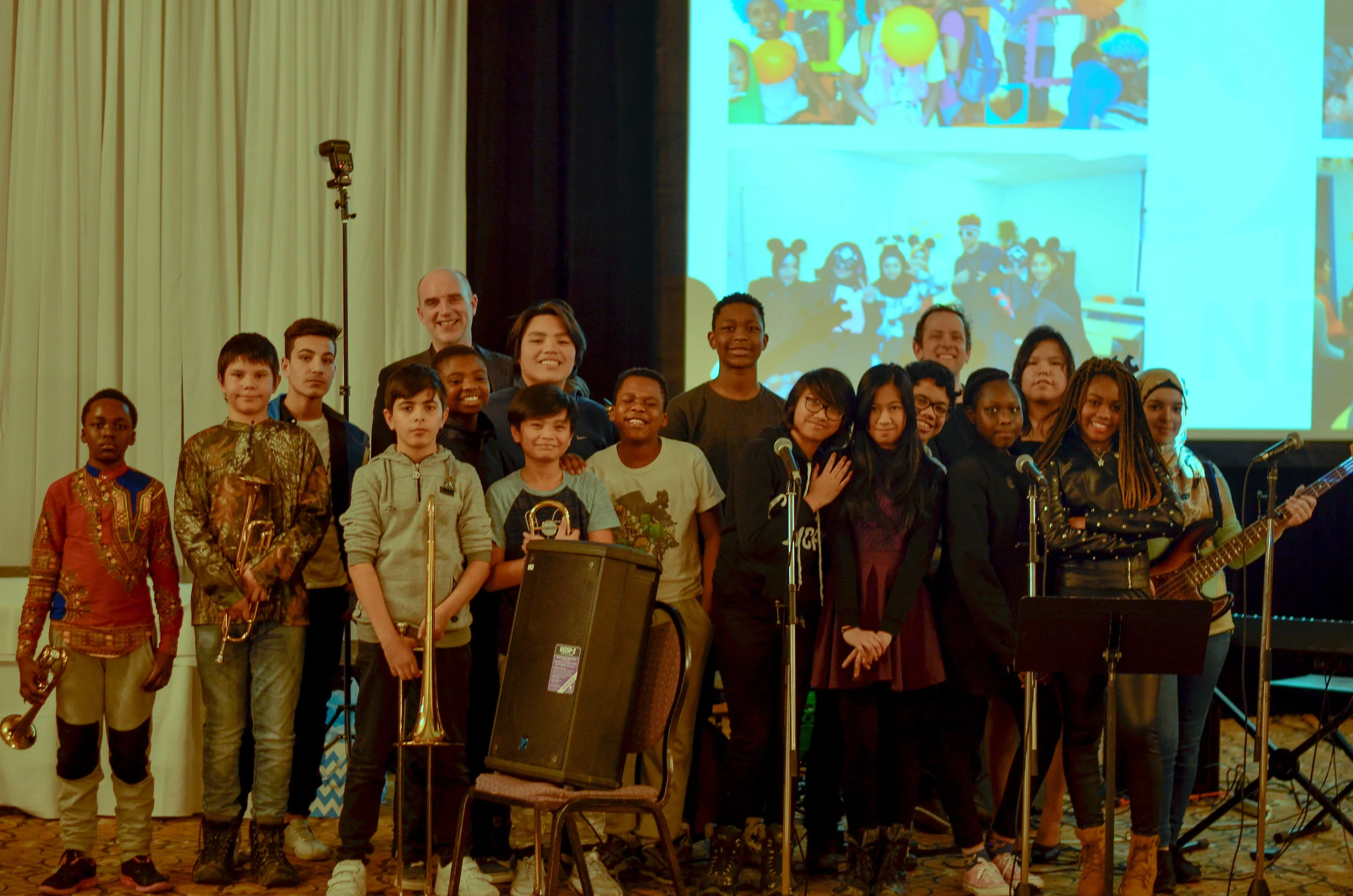
Above: Students from The Briidge program pose after a successful recital.
As Neil Watson puts it:
“What you get is students from all over the world and we’re all making music together. And once we have that initial success, they’re speaking the same language.”
That is the power of The Bridge: music as a shared language, and a place where young people can find their voice.
Help youth access live music through Jazz Winnipeg’s Tickets for Kids
Jazz Winnipeg’s Tickets for Kids program helps bring young people into meaningful live music experiences during the festival and throughout the year.
In partnership with community organizations, this initiative provides access to performances that inspire creativity, confidence, and connection through music.
To support Tickets for Kids or learn more, contact:
angela@jazzwinnipeg.com | (204) 989-4656