Nearly four decades after opening a music school in his father’s name, Chet Breau is still passing along the lessons that shaped him — from one generation, one student, and one listener to the next.
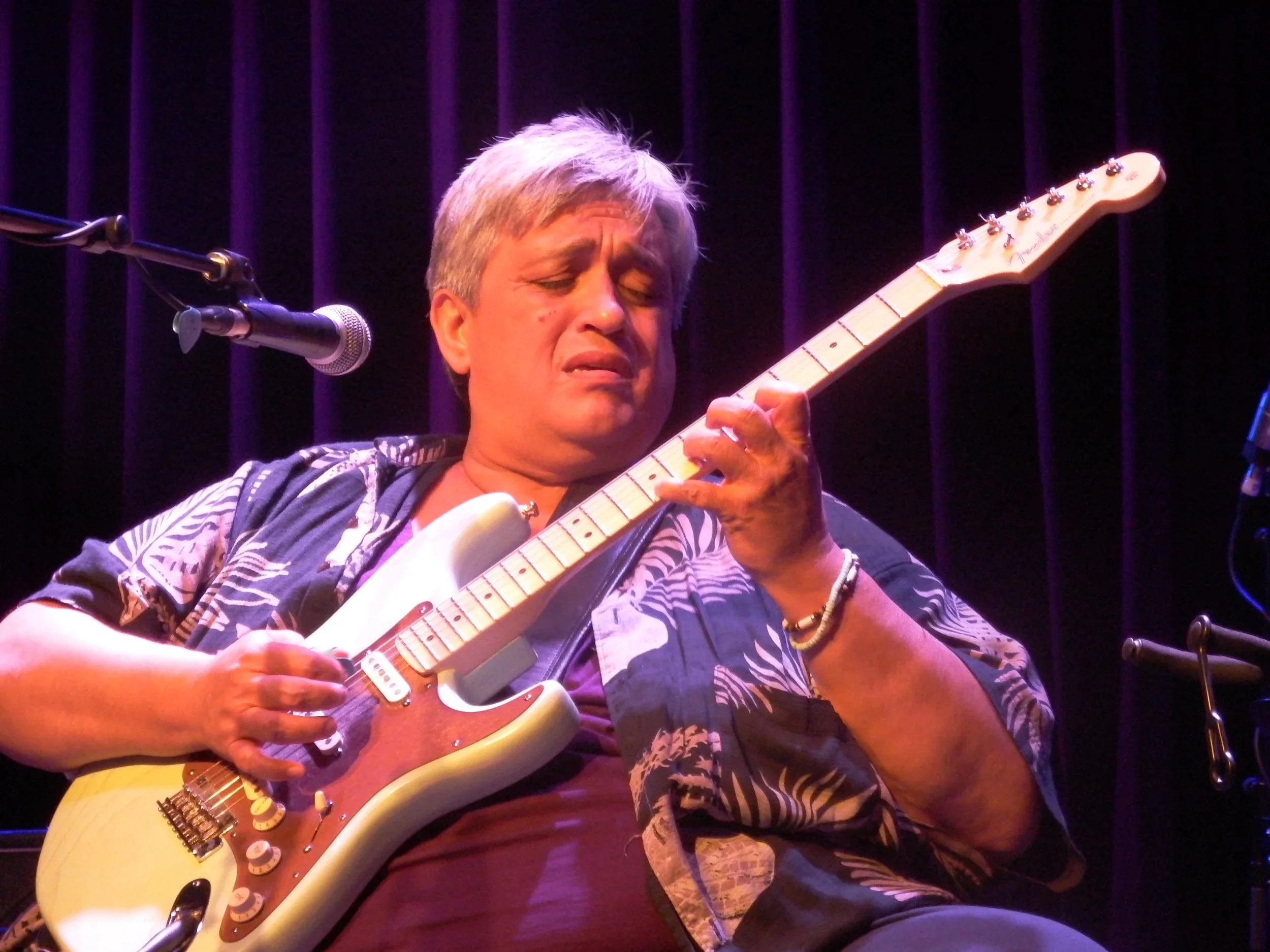
Above: For Chet Breau, carrying a musical tradition forward is less about imitation than sharing what was passed down. He brings that history, experience, and love of the guitar to The Club Room for Jazz at the Fort Garry Hotel on Sunday, September 27.
🎧 Listen Along: This week’s playlist is inspired by the musical world around Chet Breau — from the unmistakable guitar of his father, Lenny Breau, to Chet Atkins, jazz standards, and other influences that helped shape his musical path. A companion to this week’s feature, it offers a glimpse into the family history and guitar tradition behind Chet’s story. Listen to “Fingerpicking Good” on Spotify »
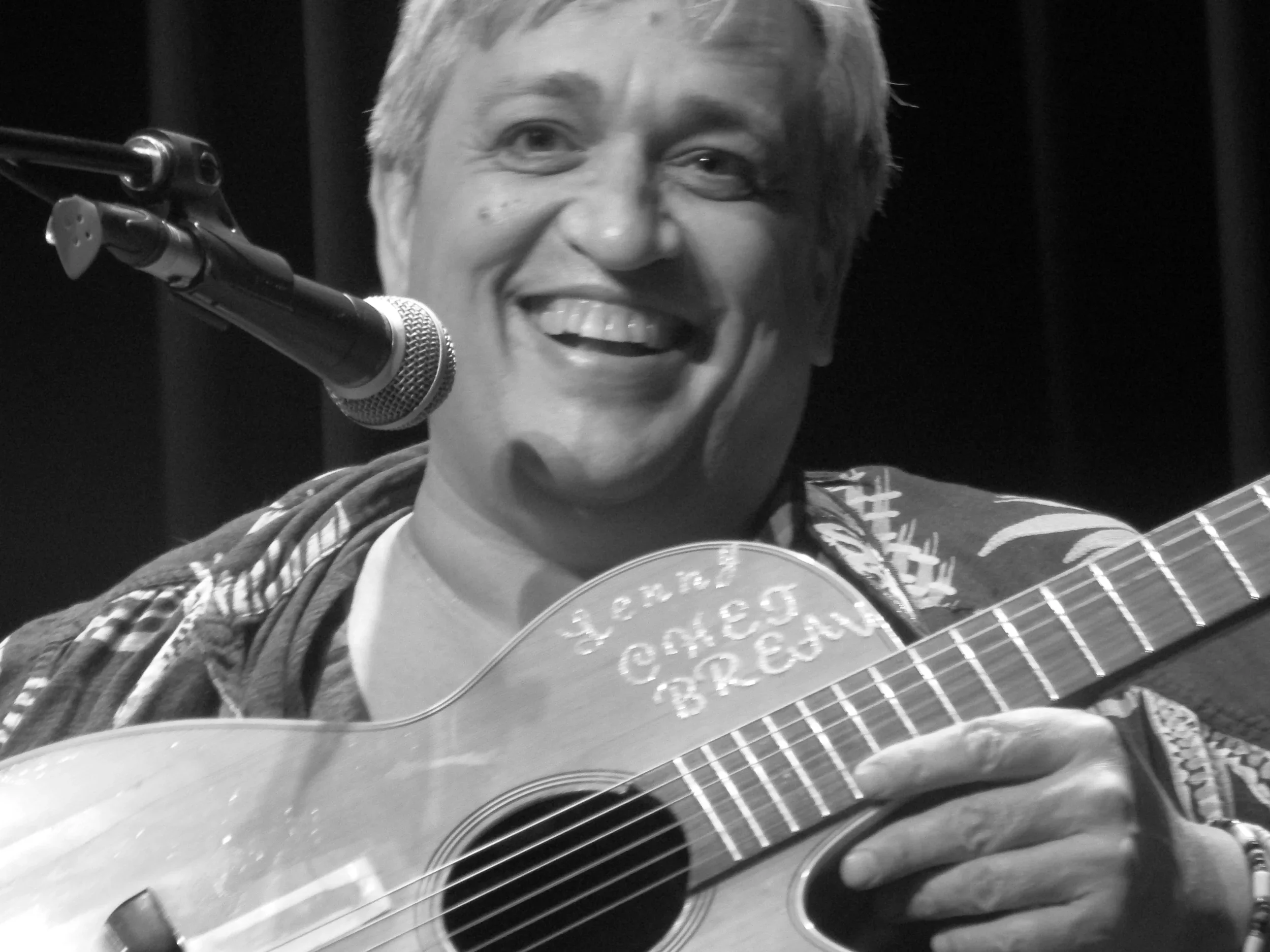
Above: Chet Breau grew up surrounded by music, learning guitar from his father, legendary guitarist Lenny Breau, from an early age. Those lessons became the foundation of a musical path that continues to unfold today.
In 1988, not long after opening the Lenny Breau School of Music in Winnipeg, a young Chet Breau summed up his philosophy as a teacher in a local business profile.
“No one can teach you to play,” he said. “I show you the road and give you the tools and the rest is up to you.”
Nearly four decades later, remarkably little has changed.
“I give them the tools,” Breau says today, describing his approach with students. “Show them kind of what you need to know to express yourself — and then just try to have them learn how to express themselves using that.”
For Breau, those tools were first placed in his hands by his father.
Legendary guitarist Lenny Breau began teaching Chet when he was around seven years old. Where today a parent might hand a restless kid an iPad to keep them occupied, Lenny gave his son a guitar and a set of intricate flamenco and fingerstyle patterns.
What began as a way to keep him from “jumping up and down on everything” gradually grew into songs, jazz standards, and the playing of guitarists like Chet Atkins.
Some of those early lessons, Chet says, are still unfolding.
“My dad taught me off and on my whole life,” he says. “Taught me a lot of things that I’m working on today.”
There is a laugh in the memory, too. Chet suspects some of those early guitar exercises served a practical purpose.
“He had me working on all kinds of little intricate flamenco things and techniques from a very early age,” he says. “I think it was mostly to just sort of keep me quiet.”
But what began as a way to occupy an energetic kid became something much bigger: the beginning of a musical language Chet has spent a lifetime learning, expanding and passing along.
“My dad taught me off and on my whole life. Taught me a lot of things that I’m working on today.”
After his father’s death in 1984, Chet headed to Los Angeles to keep studying guitar, enrolling in a performance program where he had the chance to learn around players like Joe Pass.
He later returned to Winnipeg and opened the Lenny Breau School of Music in his father’s honour. Teaching became a big part of his life, but so did performing.
Over the years, Chet has worked across jazz, flamenco, blues, folk and fingerstyle guitar, while continuing to draw from the music he grew up with. One of his recordings was a tribute to his father and featured bassist Ron Halldorson and drummer Reg Kelln, both of whom had played with Lenny earlier in his career.
Still, Chet has never been interested in simply copying what came before him. For him, the point is to understand the music well enough to make something of your own.
That idea carries directly into how he teaches.
He has nothing against YouTube or learning online, but he sees a difference between picking up bits and pieces and actually understanding how music works.
“I get a lot of guys that might be playing for 30 years and they know about 100 parts of little bits of songs, but they don’t really know how it all works.”
So with students, Chet goes back to the basics — scales, chords, structure, how songs are put together — and then helps them use that knowledge to find their own way of playing.
“That one-on-one mentorship, I think it’s really important,” he says. “It was for me.”
“I give them the tools … show them kind of what you need to know to express yourself.”
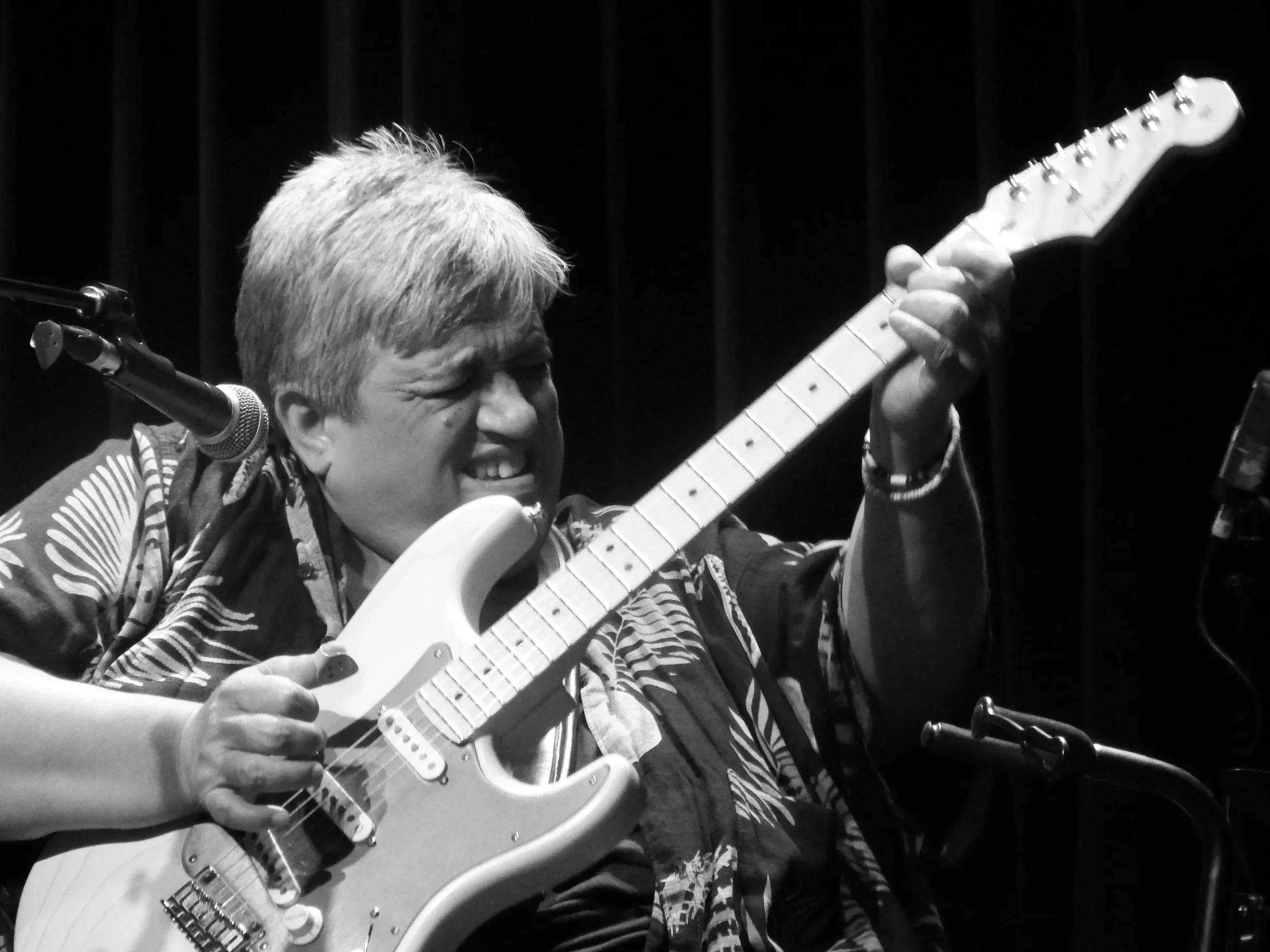
Above: Lenny Breau introduced Chet to intricate fingerstyle and flamenco techniques before moving into songs, jazz standards, and the playing of guitarists like Chet Atkins. Decades later, Chet says some of those early lessons are still revealing themselves.
That same idea — learning enough of the language to express something personal — runs through Chet’s approach as a performer.
Fingerstyle guitar has long been central to it. Rather than dividing melody, harmony, and bass between several musicians, Chet learned to bring them together under his own hands. That way, a tune can stand on its own whether he is playing solo or surrounded by a band — and also gives him room to move.
His upcoming Jazz at the Fort Garry Hotel performance will draw from jazz standards, original music, recordings from throughout his career and the folk and fingerstyle traditions he grew up hearing — from Chet Atkins to Gordon Lightfoot and Bruce Cockburn.
And, he adds with a grin audible even over the phone, he can still “be a force with an overdrive pedal.”
For all that versatility, though, technique isn’t really the destination — connection is.
“I just want people to feel like I’ve made a heart-to-heart connection,” he says. “Have everybody really feel good and maybe evoke a few memories.”
It’s one reason Chet values the kind of room in which the music itself is the reason everyone has gathered.
Like most working musicians, he has spent plenty of nights performing in restaurants and bars where the attention is divided — sometimes literally playing beneath television screens while a game carries on above him.
A listening room offers something different.
“When you’re in a venue where people are really listening … you can be a lot more intimate,” he says. “They feel like they’re part of the magic that you hope happens between everyone.”
“It’s really beautiful to have a room where people are going to listen and you’re appreciated.”
It feels like a natural place for Chet to be at this point in his career — in a room where people are there to listen.
He grew up learning by listening: to records, to teachers and, especially, to his father. The things Lenny showed him as a kid are still part of the way he plays and teaches today.
Back in 1988, Chet said a teacher’s job was to “show you the road and give you the tools.”
Nearly 40 years later, that idea still holds. Sometimes he’s passing it on to a student across from him with a guitar — sometimes he’s doing it from the stage.
Chet Breau Trio plays Jazz at the Fort Garry Hotel on Sunday, September 27 at 7:00 PM.
Help Keep the Music Moving Forward
Chet Breau’s story is a reminder that music is passed from one person to another — through teaching, performance, mentorship and listening.
Your support helps Jazz Winnipeg create spaces where artists can be heard, audiences can connect, and the next generation can keep learning.